Array
(
[count_posts] => 2
[cache_key] => Query_Posts::global::hu::YTo1OntzOjQ6ImxhbmciO3M6MjoiaHUiO3M6NzoiZG9tYWlucyI7YToxOntpOjA7czo0OiJsaWZlIjt9czo2OiJvZmZzZXQiO2k6MDtzOjk6InRheF9xdWVyeSI7YToxOntpOjA7YTozOntzOjg6InRheG9ub215IjtzOjg6InBvc3RfdGFnIjtzOjU6ImZpZWxkIjtzOjI6ImlkIjtzOjU6InRlcm1zIjthOjE6e2k6MDtpOjE5ODMxO319fXM6MTE6ImFmdGVyTG9ja2VyIjtpOjA7fQ==
[has_result] => 1
[posts] => Array
(
[0] => Array
(
[id] => 64299
[content] =>
Betiltották a fakitermelést a Tanzániában lévő Kilimandzsáró Nemzeti Parkban, Afrika legmagasabb hegyének védelme érdekében.
A tilalmat Damas Ndumbaro természetvédelmi és turizmusért felelős miniszter jelentette be a parkban tett hivatalos látogatása alkalmával.
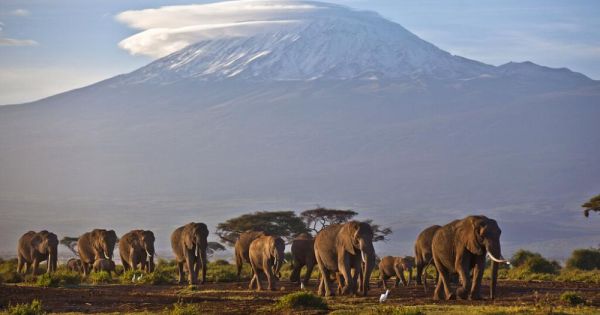
Közleménye szerint a hegy lábánál élő lakosok betörnek a hegy védelme érdekében létrehozott nemzeti park területére és kivágják a fákat.
Nyilatkozatában Ndumbaro a tilalom betartására sürgette a Tanzániai Nemzeti Parkok (TANAPA) igazgatóságát.
„Meg kell védenünk a Kilimandzsárót és környezetét” – mondta a miniszter. Arra szólította fel a TANAPA-t, hogy segítse a hegy környezetében élőket, indítson fatelepítési és más környezetvédelmi, például méhészeti projekteket.
[type] => post
[excerpt] => Betiltották a fakitermelést a Tanzániában lévő Kilimandzsáró Nemzeti Parkban, Afrika legmagasabb hegyének védelme érdekében.
[autID] => 12
[date] => Array
(
[created] => 1626556800
[modified] => 1626485048
)
[title] => Tilos a fakitermelés a Kilimandzsáró környezetében lévő erdőkben
[url] => https://life.karpat.in.ua/?p=64299&lang=hu
[status] => publish
[translations] => Array
(
[hu] => 64299
[uk] => 64404
)
[aut] => totinviktoria
[lang] => hu
[image_id] => 64300
[image] => Array
(
[id] => 64300
[original] => https://life.karpat.in.ua/wp-content/uploads/2021/07/betiltottak-a-fakitermelest-a-kilimandzsaro-kornyeken-600x315-crop.jpg
[original_lng] => 26463
[original_w] => 600
[original_h] => 315
[sizes] => Array
(
[thumbnail] => Array
(
[url] => https://life.karpat.in.ua/wp-content/uploads/2021/07/betiltottak-a-fakitermelest-a-kilimandzsaro-kornyeken-600x315-crop-150x150.jpg
[width] => 150
[height] => 150
)
[medium] => Array
(
[url] => https://life.karpat.in.ua/wp-content/uploads/2021/07/betiltottak-a-fakitermelest-a-kilimandzsaro-kornyeken-600x315-crop-300x158.jpg
[width] => 300
[height] => 158
)
[medium_large] => Array
(
[url] => https://life.karpat.in.ua/wp-content/uploads/2021/07/betiltottak-a-fakitermelest-a-kilimandzsaro-kornyeken-600x315-crop.jpg
[width] => 600
[height] => 315
)
[large] => Array
(
[url] => https://life.karpat.in.ua/wp-content/uploads/2021/07/betiltottak-a-fakitermelest-a-kilimandzsaro-kornyeken-600x315-crop.jpg
[width] => 600
[height] => 315
)
[1536x1536] => Array
(
[url] => https://life.karpat.in.ua/wp-content/uploads/2021/07/betiltottak-a-fakitermelest-a-kilimandzsaro-kornyeken-600x315-crop.jpg
[width] => 600
[height] => 315
)
[2048x2048] => Array
(
[url] => https://life.karpat.in.ua/wp-content/uploads/2021/07/betiltottak-a-fakitermelest-a-kilimandzsaro-kornyeken-600x315-crop.jpg
[width] => 600
[height] => 315
)
[full] => Array
(
[url] => https://life.karpat.in.ua/wp-content/uploads/2021/07/betiltottak-a-fakitermelest-a-kilimandzsaro-kornyeken-600x315-crop.jpg
[width] => 600
[height] => 315
)
)
)
[video] =>
[comments_count] => 0
[domain] => Array
(
[hid] => life
[color] => red
[title] => Життя
)
[_edit_lock] => 1626601794:2
[_thumbnail_id] => 64300
[_edit_last] => 12
[translation_required] => 2
[views_count] => 4627
[_oembed_551f2f8421edc65b207022388b732e50] =>
[_oembed_time_551f2f8421edc65b207022388b732e50] => 1626474335
[_oembed_bc8c186930dd8f4e9ce08f1089cd4b38] =>
[_oembed_time_bc8c186930dd8f4e9ce08f1089cd4b38] => 1626474336
[translation_required_done] => 1
[_oembed_16cb28861bc8234099d67f6caedc4cdd] =>
[_oembed_time_16cb28861bc8234099d67f6caedc4cdd] => 1719527768
[_oembed_f5331b91ef6dff171028117a7a852bb6] =>
[_oembed_time_f5331b91ef6dff171028117a7a852bb6] => 1719527768
[_algolia_sync] => 1202737029001
[labels] => Array
(
)
[categories] => Array
(
[0] => 41
[1] => 596
[2] => 49
[3] => 39
)
[categories_name] => Array
(
[0] => Cikkek
[1] => Érdekes
[2] => Hírek
[3] => Világ
)
[tags] => Array
(
[0] => 19831
[1] => 11782
[2] => 59029
[3] => 59030
)
[tags_name] => Array
(
[0] => élettér
[1] => fakitermelés
[2] => Kilimandzsáró
[3] => Kilimandzsáró Nemzeti Parkban
)
)
[1] => Array
(
[id] => 29238
[content] =>
A legveszélyeztetettebbek az édesvízi populációk, itt 84 százalékos a csökkenés – ismertette Sipos Katalin, a WWF Magyarország igazgatója.
A WWF Élő Bolygó Jelentése az 1970-es évektől követi, hogy miként alakult az összes, Földön élő állatfaj mennyisége, és ezt a jelentést ismertette az Inforádiónak Sipos Katalin.
A WWF Magyarország igazgatója elmondta, hogy mára 68 százalékos csökkenés figyelhető meg az állatvilágban, azaz az állatfajok állományainak gyakorlatilag kétharmada eltűnt. Ezeket a fajokat az emberi tevékenység következtében a kihalás fenyegeti, hiszen folyamatosan zsugorodik az állományuk.
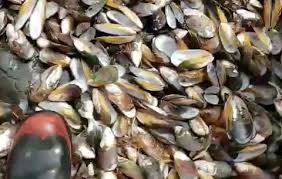
A jelentés szerint az egyes állatcsoportoknál nem egyforma a veszteség mértéke, az édesvízi fajoknál ugyanakkor 84 százalékos a csökkenés. Vagyis sokkal erősebben zsugorodott az édesvizekhez köthető fajok állománya, mint a világátlag. Itt többek között a különböző béka- és kagylófajokról van szó, amelyek tavakban, folyókban, lápokban, mocsarakban élnek.
Az állatállomány zsugorodását egyebek közt a túlfogyasztás, a nem fenntartható területhasználat és a mezőgazdaság okozza.
(hvg.hu)
[type] => post
[excerpt] => A legveszélyeztetettebbek az édesvízi populációk, itt 84 százalékos a csökkenés – ismertette Sipos Katalin, a WWF Magyarország igazgatója.
[autID] => 12
[date] => Array
(
[created] => 1600121640
[modified] => 1600017530
)
[title] => Az emberiség miatt az állatvilág kétharmada kritikus mértékben zsugorodott
[url] => https://life.karpat.in.ua/?p=29238&lang=hu
[status] => publish
[translations] => Array
(
[hu] => 29238
)
[aut] => totinviktoria
[lang] => hu
[image_id] => 29239
[image] => Array
(
[id] => 29239
[original] => https://life.karpat.in.ua/wp-content/uploads/2020/09/kagylok.jpg
[original_lng] => 13175
[original_w] => 282
[original_h] => 179
[sizes] => Array
(
[thumbnail] => Array
(
[url] => https://life.karpat.in.ua/wp-content/uploads/2020/09/kagylok-150x150.jpg
[width] => 150
[height] => 150
)
[medium] => Array
(
[url] => https://life.karpat.in.ua/wp-content/uploads/2020/09/kagylok.jpg
[width] => 282
[height] => 179
)
[medium_large] => Array
(
[url] => https://life.karpat.in.ua/wp-content/uploads/2020/09/kagylok.jpg
[width] => 282
[height] => 179
)
[large] => Array
(
[url] => https://life.karpat.in.ua/wp-content/uploads/2020/09/kagylok.jpg
[width] => 282
[height] => 179
)
[1536x1536] => Array
(
[url] => https://life.karpat.in.ua/wp-content/uploads/2020/09/kagylok.jpg
[width] => 282
[height] => 179
)
[2048x2048] => Array
(
[url] => https://life.karpat.in.ua/wp-content/uploads/2020/09/kagylok.jpg
[width] => 282
[height] => 179
)
[full] => Array
(
[url] => https://life.karpat.in.ua/wp-content/uploads/2020/09/kagylok.jpg
[width] => 282
[height] => 179
)
)
)
[video] =>
[comments_count] => 0
[domain] => Array
(
[hid] => life
[color] => red
[title] => Життя
)
[_edit_lock] => 1600006730:12
[_thumbnail_id] => 29239
[_edit_last] => 12
[views_count] => 4722
[_oembed_706aaae64cd62bca2df0a8b431728533] => Yesterday, 45 common dolphins stranded in Wellfleet, MA—one of the largest mass strandings on Cape Cod in 20 yrs. Though the majority of the dolphins were refloated when the tide came in, many were in compromised condition due to the heat, sun exposure & stranding-induced trauma. pic.twitter.com/8naaO58QMD
— ifaw (@ifawglobal) August 10, 2020
[_oembed_time_706aaae64cd62bca2df0a8b431728533] => 1600006732
[_oembed_52168b41eec51abbdedd3b01ce68f58c] => ? 45 stranded dolphins were rescued in Wellfleet yesterday by @ifawglobal and they said many of the dolphins were sunburned and overheating. https://t.co/H5iUvosMVx #boston25 #IFAW pic.twitter.com/y72cajzPfy
— Boston 25 News (@boston25) August 10, 2020
[_oembed_time_52168b41eec51abbdedd3b01ce68f58c] => 1600006733
[_oembed_3bc76d01a803385bb132db26ffac254d] =>
[_oembed_time_3bc76d01a803385bb132db26ffac254d] => 1600006733
[_oembed_e7e7625df5d59a79c9f2ae398e536152] =>
[_oembed_time_e7e7625df5d59a79c9f2ae398e536152] => 1600006733
[_oembed_1981d6277372f1232a3e449a4b719ff1] =>
[_oembed_time_1981d6277372f1232a3e449a4b719ff1] => 1605040834
[_oembed_0ba86a239e51235be746b624e14b60be] =>
[_oembed_time_0ba86a239e51235be746b624e14b60be] => 1616069097
[_oembed_bbb316109ce14ea9df10417091861938] =>
[_oembed_time_bbb316109ce14ea9df10417091861938] => 1618602514
[_oembed_d91ef553b0342a71088ad9d1e058ca2b] => A win for science: our partners at @Zoetis, a veterinary pharmaceutical company, developed a vaccine for SARS-CoV-2 (the virus that causes COVID-19) that we used to vaccinate great apes at the Zoo. The vaccine was created specifically for animals. @NatGeo https://t.co/ZpM5QVD4pl
— San Diego Zoo Wildlife Alliance (@sandiegozoo) March 5, 2021
[_oembed_time_d91ef553b0342a71088ad9d1e058ca2b] => 1618602514
[_oembed_6dcf0ac1b8a2aa33d863b9f4204063c8] =>
[_oembed_time_6dcf0ac1b8a2aa33d863b9f4204063c8] => 1622216266
[_oembed_0f3b1a344ba4cbbbe03bbb334b87650e] =>
[_oembed_time_0f3b1a344ba4cbbbe03bbb334b87650e] => 1628494784
[_oembed_845bde8055a98db1e278d529d625bd49] => Have you been tuning in for our LIVE water column exploration within Hydrographer Canyon, off the New England coast? You...
Posted by NOAA Ocean Exploration on Wednesday, July 28, 2021
[_oembed_time_845bde8055a98db1e278d529d625bd49] => 1629688079
[_oembed_bcc62742340edf0641a1b87d45db78eb] =>
[_oembed_time_bcc62742340edf0641a1b87d45db78eb] => 1631210645
[_oembed_52dcd02c57d99ed5e11bdb75a248cbcb] => This is what it looks like when you remove the inter-digital flesh from a whale’s flipper. Amazing to see how well the pentadactyl limb is retained! pic.twitter.com/GPu602wXz5
— Dr Mark D. Scherz (@MarkScherz) September 1, 2021
[_oembed_time_52dcd02c57d99ed5e11bdb75a248cbcb] => 1632609082
[_oembed_3956ca13f7024cc04c8797060fd76bda] => This is that flipper now! Mikkel carefully tied each bone to a lattice so that the precise arrangement is kept through maceration. Look at those articular cartilages! pic.twitter.com/TG7GXikKzQ
— Dr Mark D. Scherz (@MarkScherz) September 9, 2021
[_oembed_time_3956ca13f7024cc04c8797060fd76bda] => 1632609083
[_oembed_630ab071eee36f80f0c6558a6c7784bd] => The huge sunfish that got caught in the nets in Spain and was released by fishermen https://t.co/2P2x3hcP7E
— Then24 (@then24dotcom) October 13, 2021
[_oembed_time_630ab071eee36f80f0c6558a6c7784bd] => 1634818220
[_oembed_dcf826feb3160fe393a0c32ae2bd40f0] =>
[_oembed_time_dcf826feb3160fe393a0c32ae2bd40f0] => 1636370091
[_oembed_51075bb3fd2f247425c45c4df267eb08] =>
[_oembed_time_51075bb3fd2f247425c45c4df267eb08] => 1642709095
[_oembed_cf36226e4613a0bfee3b2f0be4eeea26] => A very rare sighting!
Marine biologist @jacintashackleton was at the right place at the right time to capture footage of the extremely rare 'rainbow-like' blanket octopus on the Great Barrier Reef.
? by @jacintaskackleton #LovetheReef #EyeontheReef #GreatBarrierReef pic.twitter.com/poDAIdSdhB
— Great Barrier Reef Marine Park Authority (@gbrmarinepark) January 13, 2022
[_oembed_time_cf36226e4613a0bfee3b2f0be4eeea26] => 1643422464
[_oembed_e0d8ff59da584b470352e736ab1bacb6] => Our hearts are broken at the passing of a legend. Zoo Atlanta is devastated to share that Ozzie, the world's oldest male gorilla, has died at 61: https://t.co/kzGVXUHTXL pic.twitter.com/SDF2KBScnJ
— ZooATL (@ZooATL) January 25, 2022
[_oembed_time_e0d8ff59da584b470352e736ab1bacb6] => 1643889491
[_oembed_074b71cdec5a8ade2688e42ec50c34e7] => Volume up to hear the first ever recording of the Hill's horseshoe bat (??????????? ?????) echolocation call. This recording was taken during our expedition to find the "lost" species which had only been seen twice, last in 1981.
? Dr. Winifred Frick pic.twitter.com/dGgIlFNTpE
— Bat Conservation International (@BatConIntl) March 8, 2022
[_oembed_time_074b71cdec5a8ade2688e42ec50c34e7] => 1647960541
[_oembed_a7a011796247f4987d455e604402fd64] =>
[_oembed_time_a7a011796247f4987d455e604402fd64] => 1649234794
[_oembed_066bc51ca5a1bd1ea0c399dff0cc3ad4] => She’s back!
#Melani, who has just turned 10, has once again returned to Akrotiri. She is a black, i.e. melanistic, female Flamingo (Phoenicopterus roseus), presumably the only one in the world! Great to see she is doing well!
You can see Melani at #AEEC. pic.twitter.com/Z98Wn58JWK
— BFCyprus (@bfcyprus) July 19, 2022
[_oembed_time_066bc51ca5a1bd1ea0c399dff0cc3ad4] => 1659345505
[_oembed_3e719f6814a55cc8f8be1f6ca529cc8d] => It's really massive mass testing if even the hippos are undergoing Covid19 tests (twice a week now, apparently). pic.twitter.com/WSxeQq8m7A
— Manya Koetse (@manyapan) May 8, 2022
[_oembed_time_3e719f6814a55cc8f8be1f6ca529cc8d] => 1666692690
[_oembed_75c1f0547fcc30f33659869ea8ded13c] => Could 'Toadzilla' be the world's largest cane toad on record?
This 'monster' amphibian, spotted in Queensland, weighs a whopping 2.7kgs and is 25cms long.
The toad has been euthanised and will be taken to the QLD Museum for inspection. For more, visit: https://t.co/nXTkER1ffc pic.twitter.com/MZSfY3bIMC
— SBS News (@SBSNews) January 20, 2023
[_oembed_time_75c1f0547fcc30f33659869ea8ded13c] => 1676359546
[_oembed_bcd18e09e9a7af6e1533e4c51998fae1] => #BangkokPost: At least six tigers have been found in Salak Phra Wildlife Sanctuary in Kanchanaburi for the first time in over 30 years. #Thailand https://t.co/zrflgK52Lt
— Bangkok Post (@BangkokPostNews) March 13, 2023
[_oembed_time_bcd18e09e9a7af6e1533e4c51998fae1] => 1679652311
[_oembed_a7936f786180a6d770a7e61be4d5e409] =>
[_oembed_time_a7936f786180a6d770a7e61be4d5e409] => 1685002395
[_oembed_cab0a34d29baeffe24be98d0bd8fd36d] => Hello, bird lovers! Singapore's Bird Paradise is now open to the public! Click our #AsiaAlbum to immerse in the symphony of colors https://t.co/ZjMEVLTD71 pic.twitter.com/VSscHxjgnM
— China Xinhua News (@XHNews) May 10, 2023
[_oembed_time_cab0a34d29baeffe24be98d0bd8fd36d] => 1685002395
[_oembed_227168dbf5a2805719575c3c3e5d2de1] => Morning! It's your final song suggestion game of not just the week...but also the year...and today we're tackling a prickly issue...or maybe not...as I'm after songs to go with this story please...
Five new soft-furred hedgehog species discoveredhttps://t.co/dzpoBP90rc
— Simon Parkin💙 (@SimonParkinTV) December 22, 2023
[_oembed_time_227168dbf5a2805719575c3c3e5d2de1] => 1705909293
[_oembed_a54eeb35840cdfc7f4a68f01ba203fdc] => Five new species of soft-furred hedgehogs found in South East Asia | World News | Sky News https://t.co/J0wpWGGFa1
— Mary O'Leary (@MaryOLe14603586) December 22, 2023
[_oembed_time_a54eeb35840cdfc7f4a68f01ba203fdc] => 1705909293
[_oembed_25607cb1f0d4f63461aa8ba13d3b07fd] => Los gimnuros o ratas lunares son los "otros" erizos. Pertenecen a la familia Erinaceidae pero subfamilia Galericinae, del SE de Asia. Ejemplos:
- Gimnuro de orejas largas (Hylomys megalotis, izq Laos)
- Gimnuro de orejas cortas (H. suillus, Indochina, Borneo, Java, Sumatra, dcha) pic.twitter.com/UaSqTeHFjr
— cronicasdefauna (@cronicasdefauna) June 17, 2022
[_oembed_time_25607cb1f0d4f63461aa8ba13d3b07fd] => 1705909294
[_oembed_92146c4ccbebaf860b8ebb86ce993471] =>
[_oembed_time_92146c4ccbebaf860b8ebb86ce993471] => 1719691041
[_oembed_9b1a45a2c5dba7c5b3627dd681db79a1] => Hello, bird lovers! Singapore's Bird Paradise is now open to the public! Click our #AsiaAlbum to immerse in the symphony of colors https://t.co/ZjMEVLTD71 pic.twitter.com/VSscHxjgnM
— China Xinhua News (@XHNews) May 10, 2023
[_oembed_time_9b1a45a2c5dba7c5b3627dd681db79a1] => 1719691042
[_oembed_7b3ec2585953935744fbc8a9078f7fc3] => #BangkokPost: At least six tigers have been found in Salak Phra Wildlife Sanctuary in Kanchanaburi for the first time in over 30 years. #Thailand https://t.co/zrflgK52Lt
— Bangkok Post (@BangkokPostNews) March 13, 2023
[_oembed_time_7b3ec2585953935744fbc8a9078f7fc3] => 1719691042
[_oembed_8a629252172f81a608a159a19edf40dc] => Could 'Toadzilla' be the world's largest cane toad on record?
This 'monster' amphibian, spotted in Queensland, weighs a whopping 2.7kgs and is 25cms long.
The toad has been euthanised and will be taken to the QLD Museum for inspection. For more, visit: https://t.co/nXTkER1ffc pic.twitter.com/MZSfY3bIMC
— SBS News (@SBSNews) January 20, 2023
[_oembed_time_8a629252172f81a608a159a19edf40dc] => 1719691042
[_oembed_72af59296509bea9abb5950765f32e53] => Morning! It's your final song suggestion game of not just the week...but also the year...and today we're tackling a prickly issue...or maybe not...as I'm after songs to go with this story please...
Five new soft-furred hedgehog species discoveredhttps://t.co/dzpoBP90rc
— Simon Parkin💙 (@SimonParkinTV) December 22, 2023
[_oembed_time_72af59296509bea9abb5950765f32e53] => 1721051955
[_oembed_545d3c01ce9860827334ba3be365ee01] => Five new species of soft-furred hedgehogs found in South East Asia | World News | Sky News https://t.co/J0wpWGGFa1
— Mary O'Leary (@MaryOLe14603586) December 22, 2023
[_oembed_time_545d3c01ce9860827334ba3be365ee01] => 1721051955
[_oembed_a73bbfa6bac96635ed3c138307bccda9] => Los gimnuros o ratas lunares son los "otros" erizos. Pertenecen a la familia Erinaceidae pero subfamilia Galericinae, del SE de Asia. Ejemplos:
- Gimnuro de orejas largas (Hylomys megalotis, izq Laos)
- Gimnuro de orejas cortas (H. suillus, Indochina, Borneo, Java, Sumatra, dcha) pic.twitter.com/UaSqTeHFjr
— cronicasdefauna (@cronicasdefauna) June 17, 2022
[_oembed_time_a73bbfa6bac96635ed3c138307bccda9] => 1721051955
[_algolia_sync] => 831499783002
[_oembed_8e0af8929b114b0eaa78d48b6da5a02b] =>
[_oembed_time_8e0af8929b114b0eaa78d48b6da5a02b] => 1763196605
[labels] => Array
(
)
[categories] => Array
(
[0] => 41
[1] => 596
[2] => 49
[3] => 11
[4] => 592
[5] => 598
[6] => 39
)
[categories_name] => Array
(
[0] => Cikkek
[1] => Érdekes
[2] => Hírek
[3] => Kiemelt téma
[4] => Társadalom
[5] => Tudomány
[6] => Világ
)
[tags] => Array
(
[0] => 1372
[1] => 19831
[2] => 19832
[3] => 12973
)
[tags_name] => Array
(
[0] => állatok
[1] => élettér
[2] => emberi tevékenység
[3] => kihalás
)
)
)
[model] => Array
(
[lang] => hu
[offset] => 0
[tax_query] => Array
(
[0] => Array
(
[taxonomy] => post_tag
[field] => id
[terms] => Array
(
[0] => 19831
)
)
)
[afterLocker] => 0
)
[_model] => Array
(
[lang] => hu
[domains] => Array
(
[0] => life
)
[offset] => 0
[tax_query] => Array
(
[0] => Array
(
[taxonomy] => post_tag
[field] => id
[terms] => Array
(
[0] => 19831
)
)
)
[afterLocker] => 0
)
[domains] => Array
(
[0] => life
)
[_domains] => Array
(
[life] => 1
)
[status] => 1
[from_cache] =>
)
élettér (1 Oldal)