Array
(
[count_posts] => 10
[cache_key] => Query_Posts::global::hu::YTo1OntzOjQ6ImxhbmciO3M6MjoiaHUiO3M6NzoiZG9tYWlucyI7YToxOntpOjA7czo0OiJsaWZlIjt9czo2OiJvZmZzZXQiO2k6MTA7czo5OiJ0YXhfcXVlcnkiO2E6MTp7aTowO2E6Mzp7czo4OiJ0YXhvbm9teSI7czo4OiJwb3N0X3RhZyI7czo1OiJmaWVsZCI7czoyOiJpZCI7czo1OiJ0ZXJtcyI7YToxOntpOjA7aToxMDMyMjt9fX1zOjExOiJhZnRlckxvY2tlciI7aTowO30=
[has_result] => 1
[posts] => Array
(
[0] => Array
(
[id] => 111837
[content] =>
A NASA Mars-járója szokatlan képet készített valamiről, ami a Mars vörös homokjában fekszik: egy köteg madzagról.
A Mars-járó bal első veszélyelkerülő kamerája július 12-én készített felvételt a világos színű tárgyról, amelyet egyesek spagettihoz hasonlítottak. Az űrkutatási hivatal illetékesei megerősítették, hogy szerintük a tárgy a Mars-járó leszállásakor visszamaradt huzal.
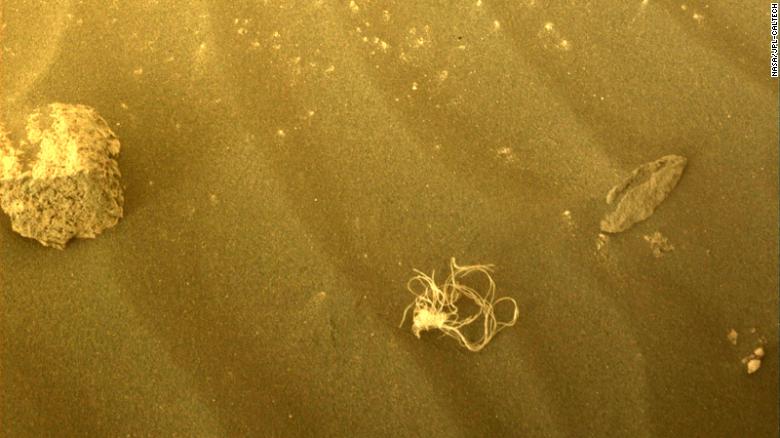
A madzag a Mars-járó leszállófokáról származhat, amely egy rakétahajtású sugárhajtóműhöz hasonló alkatrész, amelyet a Mars-járó biztonságos leeresztéséhez használtak – közölte a Perseverance Mars-vizsgáló küldetés szóvivője a NASA Pasadenában található Jet Propulsion Laboratóriumában.
Sosem járt ott a Mars-járó, ahol az alkatrészt találták
„A Perseverance korábban nem járt azon a területen, ahol a madzagot megtalálták, így valószínűleg a szél fújta oda” – mondta a szóvivő a CNN szerint.
A Mars-járó jelenleg a Jezero-kráter nevű ősi deltát vizsgálja, és olyan mikroszkopikus élet jelei után kutat, amely évmilliárdokkal ezelőtt a Marsot nevezhette otthonának. Ebben a kráterben szállt le eredetileg a Perseverance 2021. február 18-án.
Amikor a Perseverance négy nappal később újra felkereste a huzalok helyszínét, az objektum eltűnt.
[type] => post
[excerpt] => A NASA Mars-járója szokatlan képet készített valamiről, ami a Mars vörös homokjában fekszik: egy köteg madzagról.
[autID] => 12
[date] => Array
(
[created] => 1658443440
[modified] => 1658465856
)
[title] => Rejtélyes madzagköteget talált a NASA Mars-járója
[url] => https://life.karpat.in.ua/?p=111837&lang=hu
[status] => publish
[translations] => Array
(
[hu] => 111837
)
[aut] => totinviktoria
[lang] => hu
[image_id] => 111839
[image] => Array
(
[id] => 111839
[original] => https://life.karpat.in.ua/wp-content/uploads/2022/07/pathfinder01.jpg
[original_lng] => 81311
[original_w] => 649
[original_h] => 358
[sizes] => Array
(
[thumbnail] => Array
(
[url] => https://life.karpat.in.ua/wp-content/uploads/2022/07/pathfinder01-150x150.jpg
[width] => 150
[height] => 150
)
[medium] => Array
(
[url] => https://life.karpat.in.ua/wp-content/uploads/2022/07/pathfinder01-300x165.jpg
[width] => 300
[height] => 165
)
[medium_large] => Array
(
[url] => https://life.karpat.in.ua/wp-content/uploads/2022/07/pathfinder01.jpg
[width] => 649
[height] => 358
)
[large] => Array
(
[url] => https://life.karpat.in.ua/wp-content/uploads/2022/07/pathfinder01.jpg
[width] => 649
[height] => 358
)
[1536x1536] => Array
(
[url] => https://life.karpat.in.ua/wp-content/uploads/2022/07/pathfinder01.jpg
[width] => 649
[height] => 358
)
[2048x2048] => Array
(
[url] => https://life.karpat.in.ua/wp-content/uploads/2022/07/pathfinder01.jpg
[width] => 649
[height] => 358
)
[full] => Array
(
[url] => https://life.karpat.in.ua/wp-content/uploads/2022/07/pathfinder01.jpg
[width] => 649
[height] => 358
)
)
)
[video] =>
[comments_count] => 0
[domain] => Array
(
[hid] => life
[color] => red
[title] => Життя
)
[_edit_lock] => 1658455057:12
[_thumbnail_id] => 111839
[_edit_last] => 12
[views_count] => 3684
[_oembed_8507a802bcd8a211015f165011b0bff8] =>
[_oembed_time_8507a802bcd8a211015f165011b0bff8] => 1664538330
[_oembed_699a9949b6c91160e850e493e8805212] => Teams at @NASAKennedy have assessed impacts from Hurricane Ian & determined there was no damage to #Artemis I flight hardware.
@NASA will focus on the Nov. 12-27 launch period to give employees time for post-storm recovery & identify checkouts for launch https://t.co/bjDiRgnOvt pic.twitter.com/7nK2tKVDOR
— NASA Artemis (@NASAArtemis) September 30, 2022
[_oembed_time_699a9949b6c91160e850e493e8805212] => 1665142577
[_oembed_f73389d4a56b6973b8ef21bf5a795789] =>
[_oembed_time_f73389d4a56b6973b8ef21bf5a795789] => 1670570223
[_oembed_41753a0d6302dd74e6569aab6aaedf09] => Orion's Optical Navigation Camera captured these stunning views of the lunar surface during our flyby on #Artemis flight day 20. pic.twitter.com/mfTL5ZSPSp
— Orion Spacecraft (@NASA_Orion) December 7, 2022
[_oembed_time_41753a0d6302dd74e6569aab6aaedf09] => 1671442807
[_oembed_c67e1c0263f09077c80d9fc457c0feca] => The imagery we continue to get out of @NASA_Orion's onboard cameras is outstanding. Downlinked the lunar fly-by photos yesterday, and they are incredible - a few of my favorites below. Visit https://t.co/ZrjE1SVAWC to see the rest. pic.twitter.com/5KXDF3PsLq
— Jim Free (@JimFree) December 7, 2022
[_oembed_time_c67e1c0263f09077c80d9fc457c0feca] => 1671442807
[_oembed_30289a69c4d7f7f6ef6d4ffb3c78045a] =>
[_oembed_time_30289a69c4d7f7f6ef6d4ffb3c78045a] => 1672219269
[_oembed_c83cdc68b8594ac42423c3625f50d353] =>
[_oembed_time_c83cdc68b8594ac42423c3625f50d353] => 1672219269
[_oembed_b17ac91756745e69382f928dd2bb3301] => Splashdown!#Crew5 is back on Earth, completing a science mission of nearly six months on the @Space_Station. Their @SpaceX Dragon Endurance spacecraft touched down at 9:02pm ET (0202 UTC March 12) near Tampa off the coast of Florida. pic.twitter.com/nLMC0hbKY4
— NASA (@NASA) March 12, 2023
[_oembed_time_b17ac91756745e69382f928dd2bb3301] => 1678827709
[_oembed_3a3b4b728bce09709458b7df793900f0] => We've been tracking a new asteroid named 2023 DW that has a very small chance of impacting Earth in 2046. Often when new objects are first discovered, it takes several weeks of data to reduce the uncertainties and adequately predict their orbits years into the future. (1/2) pic.twitter.com/SaLC0AUSdP
— NASA Asteroid Watch (@AsteroidWatch) March 7, 2023
[_oembed_time_3a3b4b728bce09709458b7df793900f0] => 1678827709
[_oembed_57590107d0d3da5f85a713767ccf2dba] =>
[_oembed_time_57590107d0d3da5f85a713767ccf2dba] => 1681722387
[_oembed_6d80054a2a165daa3b00545a76d7a2e6] => Starship is ready for launch ?
Awaiting regulatory approval
— Elon Musk (@elonmusk) April 9, 2023
[_oembed_time_6d80054a2a165daa3b00545a76d7a2e6] => 1682000769
[_oembed_eab5644198e7637d4f057ae939d6a551] => Starship fully stacked at Starbase. Team is working towards a launch rehearsal next week followed by Starship’s first integrated flight test ~week later pending regulatory approval pic.twitter.com/9VbJLppswp
— SpaceX (@SpaceX) April 6, 2023
[_oembed_time_eab5644198e7637d4f057ae939d6a551] => 1682000770
[_oembed_e02ac65f153a9de93cbee9bc2534027d] =>
[_oembed_time_e02ac65f153a9de93cbee9bc2534027d] => 1686148014
[_oembed_91a0f70038b4fabcb8baed4a6ba6c210] =>
[_oembed_time_91a0f70038b4fabcb8baed4a6ba6c210] => 1703525092
[_oembed_3d7e63d625b87d7786a8690ae29ddd1c] =>
[_oembed_time_3d7e63d625b87d7786a8690ae29ddd1c] => 1715414710
[_oembed_f9ae9abb0d4fce11c520b492a5fcd1c5] => NASA just released the clearest view of Mars ever. (sound of Mars)
pic.twitter.com/XNIYJ0f15R
— Science (@ScienceGuys_) June 17, 2024
[_oembed_time_f9ae9abb0d4fce11c520b492a5fcd1c5] => 1722608586
[_oembed_a6ab6d20f238ce9f0c2d6eeee37a35a4] =>
[_oembed_time_a6ab6d20f238ce9f0c2d6eeee37a35a4] => 1722608587
[_oembed_399ad795235db89e01f77babb17efbf2] =>
[_oembed_time_399ad795235db89e01f77babb17efbf2] => 1729253687
[_oembed_c559bf7eb89b1e09c09c39578407027e] =>
[_oembed_time_c559bf7eb89b1e09c09c39578407027e] => 1732956662
[_oembed_a8ad8e6880668d1ae3c623a91c07b3f7] =>
[_oembed_time_a8ad8e6880668d1ae3c623a91c07b3f7] => 1738147573
[_oembed_41ce0c70bfdb74e7fff3a4ae8583e2e4] => Russia’s new plasma engine could reach Mars in just 30 days.
Russia's new plasma rocket engine is engineered to cut the transit time to Mars from 7 months down to between 30 and 60 days.
This device uses magnetic forces to speed up charged hydrogen particles to nearly 100 km/s… pic.twitter.com/S20us6N1RI
— Astro Joel (@JoelWard2000) February 11, 2025
[_oembed_time_41ce0c70bfdb74e7fff3a4ae8583e2e4] => 1740851561
[_oembed_e822a8fdebda26b41a4c18f4cac727eb] => 🇷🇺 RUSSIA's NEW PLASMA ENGINE COULD REDUCE MARS 🔴 TRAVEL TIME TO 30 DAYS!
A faster journey to Mars would not only increase efficiency but also minimize the risks associated with prolonged exposure to cosmic radiation for astronauts.
The plasma engine utilizes hydrogen as… pic.twitter.com/lTGtVYzmaA
— Brian Basson (@BassonBrain) February 9, 2025
[_oembed_time_e822a8fdebda26b41a4c18f4cac727eb] => 1740851562
[_oembed_0f2acd7bdc22e7446b5b836eea45cfbb] => Russia’s plasma engine could reach Mars in 30 days, drastically reduce space travel timehttps://t.co/JogHCC1pu9
— Interesting Engineering (@IntEngineering) February 9, 2025
[_oembed_time_0f2acd7bdc22e7446b5b836eea45cfbb] => 1740851562
[_oembed_273975bb088f4d85fb50260c557daba5] => Congratulations to the @SpaceX and @NASA teams for another safe astronaut return!
Thank you to @POTUS for prioritizing this mission! https://t.co/KknFDbh59s
— Elon Musk (@elonmusk) March 18, 2025
[_oembed_time_273975bb088f4d85fb50260c557daba5] => 1743495900
[_algolia_sync] => 831667829002
[_oembed_c226e0ff99e9c4e14ba88d3cf7631dc2] => Now targeting no earlier than Wednesday, June 11 for Falcon 9 to launch @Axiom_Space's Ax-4 mission to the @Space_Station due to high winds in the ascent corridor → https://t.co/LU1wyD8uZ0 pic.twitter.com/7jygzWEUwD
— SpaceX (@SpaceX) June 9, 2025
[_oembed_time_c226e0ff99e9c4e14ba88d3cf7631dc2] => 1752145180
[_oembed_e871789c3f2ab535c1847d9761d7c988] => LIFTOFF of Axiom-4 🚀
After 41 long years, an Indian astronaut is finally on his way to space! 🇮🇳 pic.twitter.com/2KIq7IacCu
— ISRO Spaceflight (@ISROSpaceflight) June 25, 2025
[_oembed_time_e871789c3f2ab535c1847d9761d7c988] => 1753434013
[_oembed_6a740de7420fe36b1ecc47e96471c901] =>
[_oembed_time_6a740de7420fe36b1ecc47e96471c901] => 1753434013
[_oembed_402c753b18b3dfdb2df256e3512ab7fe] => Launch day is here 🚀🇵🇱
Go Axiom-4! 🔥#Ax4 #IGNIS pic.twitter.com/9UGDbtqKJT
— Sławosz Uznański-Wiśniewski (@astro_slawosz) June 25, 2025
[_oembed_time_402c753b18b3dfdb2df256e3512ab7fe] => 1753434013
[labels] => Array
(
)
[categories] => Array
(
[0] => 41
[1] => 596
[2] => 49
[3] => 590
[4] => 592
[5] => 598
[6] => 39
)
[categories_name] => Array
(
[0] => Cikkek
[1] => Érdekes
[2] => Hírek
[3] => IT
[4] => Társadalom
[5] => Tudomány
[6] => Világ
)
[tags] => Array
(
[0] => 201789
[1] => 10322
[2] => 201788
[3] => 2185
)
[tags_name] => Array
(
[0] => madzag
[1] => Mars
[2] => Mars-járó
[3] => NASA
)
)
[1] => Array
(
[id] => 108777
[content] =>
A NASA Mars körül keringő szondája megörökítette, mi történik, ha a fagyott szén-dioxidból gáz lesz.
Furcsa, méhsejtszerű képződményeket fotózott a Mars felszínén a NASA egyik szondája, a Mars Reconnaissance Orbiter a rajta lévő HiRISE (High-Resolution Imaging Science Experiment) nevű berendezéssel. Mielőtt azonban bárki úgy gondolná, ezeket nem a marsi méhek alkották meg a bolygó felszínén.
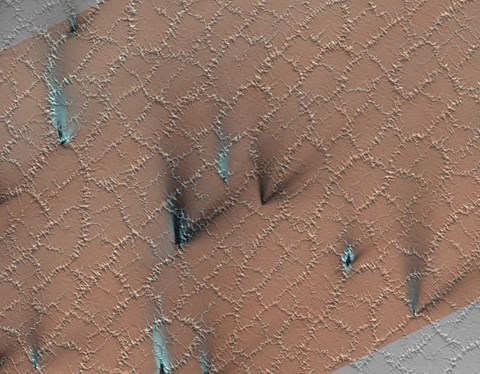
Az IFLScience beszámolója szerint a sokszögek annak köszönhetően jöttek létre, hogy a marsi tavasz során a vízjég és a szén-dioxid szezonálisan váltja egymást. A megfagyó, majd felolvadó vízjég ilyen mintákat váj a talajba.
A folyamatról annyit érdemes tudni, hogy a Mars vékony légkörének, valamint az óceán hiányának köszönhetően a sarkkörön megfagy a szén-dioxid. Amikor jön a tavasz és elkezd olvasni a sapka, a jég a szilárd halmazállapotból rögtön gőzzé válik – ez a szublimáció. Ez a folyamat alulról indul, és úgy tart felfelé. Ahogy a jég alsó rétege megolvad, a keletkező gáz a homok és a felette lévő jég közé záródik, ami növeli a nyomást. Amikor emiatt a jég megreped, egy nyíláson keresztül távozik a gáz – ez látható a képen kék színnel.
Érdekesség, hogy ezek a repedések bezáródhatnak, majd idővel újra kinyílhatnak.
[type] => post
[excerpt] => A NASA Mars körül keringő szondája megörökítette, mi történik, ha a fagyott szén-dioxidból gáz lesz.
[autID] => 12
[date] => Array
(
[created] => 1656627240
[modified] => 1656564230
)
[title] => Furcsa képződményeket fotózott a NASA szondája a Marson
[url] => https://life.karpat.in.ua/?p=108777&lang=hu
[status] => publish
[translations] => Array
(
[hu] => 108777
)
[aut] => totinviktoria
[lang] => hu
[image_id] => 108779
[image] => Array
(
[id] => 108779
[original] => https://life.karpat.in.ua/wp-content/uploads/2022/06/mars-1.jpg
[original_lng] => 106113
[original_w] => 1024
[original_h] => 450
[sizes] => Array
(
[thumbnail] => Array
(
[url] => https://life.karpat.in.ua/wp-content/uploads/2022/06/mars-1-150x150.jpg
[width] => 150
[height] => 150
)
[medium] => Array
(
[url] => https://life.karpat.in.ua/wp-content/uploads/2022/06/mars-1-300x132.jpg
[width] => 300
[height] => 132
)
[medium_large] => Array
(
[url] => https://life.karpat.in.ua/wp-content/uploads/2022/06/mars-1-768x338.jpg
[width] => 768
[height] => 338
)
[large] => Array
(
[url] => https://life.karpat.in.ua/wp-content/uploads/2022/06/mars-1.jpg
[width] => 1024
[height] => 450
)
[1536x1536] => Array
(
[url] => https://life.karpat.in.ua/wp-content/uploads/2022/06/mars-1.jpg
[width] => 1024
[height] => 450
)
[2048x2048] => Array
(
[url] => https://life.karpat.in.ua/wp-content/uploads/2022/06/mars-1.jpg
[width] => 1024
[height] => 450
)
[full] => Array
(
[url] => https://life.karpat.in.ua/wp-content/uploads/2022/06/mars-1.jpg
[width] => 1024
[height] => 450
)
)
)
[video] =>
[comments_count] => 0
[domain] => Array
(
[hid] => life
[color] => red
[title] => Життя
)
[_edit_lock] => 1656553431:12
[_thumbnail_id] => 108779
[_edit_last] => 12
[views_count] => 2980
[_oembed_7338a46efbfb0e136e60f4f5efdf5dac] => ? Hello, #Starliner! @BoeingSpace's human-rated spacecraft has arrived at the International @Space_Station for the first time, docking at 8:28pm ET (00:28 UTC). pic.twitter.com/gXceiHJhuB
— NASA (@NASA) May 21, 2022
[_oembed_time_7338a46efbfb0e136e60f4f5efdf5dac] => 1656553432
[_oembed_de2cab78f30097905fa3838a24f05e3e] =>
[_oembed_time_de2cab78f30097905fa3838a24f05e3e] => 1656553432
[_oembed_46abdc17400367dbbca951f7f8c533b3] => A tri of dust devils in Jezero Crater caught on camera by @NASAPersevere on sol 372 pic.twitter.com/bFd9BMp24D
— Kevin M. Gill (@kevinmgill) March 10, 2022
[_oembed_time_46abdc17400367dbbca951f7f8c533b3] => 1656553433
[_oembed_8507a802bcd8a211015f165011b0bff8] =>
[_oembed_time_8507a802bcd8a211015f165011b0bff8] => 1664645006
[_oembed_699a9949b6c91160e850e493e8805212] => Teams at @NASAKennedy have assessed impacts from Hurricane Ian & determined there was no damage to #Artemis I flight hardware.
@NASA will focus on the Nov. 12-27 launch period to give employees time for post-storm recovery & identify checkouts for launch https://t.co/bjDiRgnOvt pic.twitter.com/7nK2tKVDOR
— NASA Artemis (@NASAArtemis) September 30, 2022
[_oembed_time_699a9949b6c91160e850e493e8805212] => 1665140749
[_oembed_f73389d4a56b6973b8ef21bf5a795789] =>
[_oembed_time_f73389d4a56b6973b8ef21bf5a795789] => 1670410298
[_oembed_41753a0d6302dd74e6569aab6aaedf09] => Orion's Optical Navigation Camera captured these stunning views of the lunar surface during our flyby on #Artemis flight day 20. pic.twitter.com/mfTL5ZSPSp
— Orion Spacecraft (@NASA_Orion) December 7, 2022
[_oembed_time_41753a0d6302dd74e6569aab6aaedf09] => 1671794158
[_oembed_c67e1c0263f09077c80d9fc457c0feca] => The imagery we continue to get out of @NASA_Orion's onboard cameras is outstanding. Downlinked the lunar fly-by photos yesterday, and they are incredible - a few of my favorites below. Visit https://t.co/ZrjE1SVAWC to see the rest. pic.twitter.com/5KXDF3PsLq
— Jim Free (@JimFree) December 7, 2022
[_oembed_time_c67e1c0263f09077c80d9fc457c0feca] => 1671794158
[_oembed_30289a69c4d7f7f6ef6d4ffb3c78045a] =>
[_oembed_time_30289a69c4d7f7f6ef6d4ffb3c78045a] => 1672414687
[_oembed_c83cdc68b8594ac42423c3625f50d353] =>
[_oembed_time_c83cdc68b8594ac42423c3625f50d353] => 1672414687
[_oembed_3a3b4b728bce09709458b7df793900f0] => We've been tracking a new asteroid named 2023 DW that has a very small chance of impacting Earth in 2046. Often when new objects are first discovered, it takes several weeks of data to reduce the uncertainties and adequately predict their orbits years into the future. (1/2) pic.twitter.com/SaLC0AUSdP
— NASA Asteroid Watch (@AsteroidWatch) March 7, 2023
[_oembed_time_3a3b4b728bce09709458b7df793900f0] => 1678888759
[_oembed_b17ac91756745e69382f928dd2bb3301] => Splashdown!#Crew5 is back on Earth, completing a science mission of nearly six months on the @Space_Station. Their @SpaceX Dragon Endurance spacecraft touched down at 9:02pm ET (0202 UTC March 12) near Tampa off the coast of Florida. pic.twitter.com/nLMC0hbKY4
— NASA (@NASA) March 12, 2023
[_oembed_time_b17ac91756745e69382f928dd2bb3301] => 1679554575
[_oembed_6d80054a2a165daa3b00545a76d7a2e6] => Starship is ready for launch ?
Awaiting regulatory approval
— Elon Musk (@elonmusk) April 9, 2023
[_oembed_time_6d80054a2a165daa3b00545a76d7a2e6] => 1682709457
[_oembed_eab5644198e7637d4f057ae939d6a551] => Starship fully stacked at Starbase. Team is working towards a launch rehearsal next week followed by Starship’s first integrated flight test ~week later pending regulatory approval pic.twitter.com/9VbJLppswp
— SpaceX (@SpaceX) April 6, 2023
[_oembed_time_eab5644198e7637d4f057ae939d6a551] => 1682709458
[_oembed_57590107d0d3da5f85a713767ccf2dba] =>
[_oembed_time_57590107d0d3da5f85a713767ccf2dba] => 1682709458
[_oembed_e02ac65f153a9de93cbee9bc2534027d] =>
[_oembed_time_e02ac65f153a9de93cbee9bc2534027d] => 1689331181
[_oembed_91a0f70038b4fabcb8baed4a6ba6c210] =>
[_oembed_time_91a0f70038b4fabcb8baed4a6ba6c210] => 1704526365
[_oembed_3d7e63d625b87d7786a8690ae29ddd1c] =>
[_oembed_time_3d7e63d625b87d7786a8690ae29ddd1c] => 1714580532
[_oembed_a6ab6d20f238ce9f0c2d6eeee37a35a4] =>
[_oembed_time_a6ab6d20f238ce9f0c2d6eeee37a35a4] => 1719491027
[_oembed_048fe4ab63a42615dc79ffe70dcf77b8] =>
[_oembed_time_048fe4ab63a42615dc79ffe70dcf77b8] => 1719491027
[_oembed_8a03b6b801dfd46ee0a36d351c7bcc4e] =>
[_oembed_time_8a03b6b801dfd46ee0a36d351c7bcc4e] => 1719491027
[_oembed_f9ae9abb0d4fce11c520b492a5fcd1c5] => NASA just released the clearest view of Mars ever. (sound of Mars)
pic.twitter.com/XNIYJ0f15R
— Science (@ScienceGuys_) June 17, 2024
[_oembed_time_f9ae9abb0d4fce11c520b492a5fcd1c5] => 1720798834
[_oembed_399ad795235db89e01f77babb17efbf2] =>
[_oembed_time_399ad795235db89e01f77babb17efbf2] => 1729148387
[_oembed_c559bf7eb89b1e09c09c39578407027e] =>
[_oembed_time_c559bf7eb89b1e09c09c39578407027e] => 1732636036
[_oembed_a8ad8e6880668d1ae3c623a91c07b3f7] =>
[_oembed_time_a8ad8e6880668d1ae3c623a91c07b3f7] => 1735734529
[_oembed_41ce0c70bfdb74e7fff3a4ae8583e2e4] => Russia’s new plasma engine could reach Mars in just 30 days.
Russia's new plasma rocket engine is engineered to cut the transit time to Mars from 7 months down to between 30 and 60 days.
This device uses magnetic forces to speed up charged hydrogen particles to nearly 100 km/s… pic.twitter.com/S20us6N1RI
— Astro Joel (@JoelWard2000) February 11, 2025
[_oembed_time_41ce0c70bfdb74e7fff3a4ae8583e2e4] => 1740645269
[_oembed_e822a8fdebda26b41a4c18f4cac727eb] => 🇷🇺 RUSSIA's NEW PLASMA ENGINE COULD REDUCE MARS 🔴 TRAVEL TIME TO 30 DAYS!
A faster journey to Mars would not only increase efficiency but also minimize the risks associated with prolonged exposure to cosmic radiation for astronauts.
The plasma engine utilizes hydrogen as… pic.twitter.com/lTGtVYzmaA
— Brian Basson (@BassonBrain) February 9, 2025
[_oembed_time_e822a8fdebda26b41a4c18f4cac727eb] => 1740645269
[_oembed_0f2acd7bdc22e7446b5b836eea45cfbb] => Russia’s plasma engine could reach Mars in 30 days, drastically reduce space travel timehttps://t.co/JogHCC1pu9
— Interesting Engineering (@IntEngineering) February 9, 2025
[_oembed_time_0f2acd7bdc22e7446b5b836eea45cfbb] => 1740645269
[_oembed_273975bb088f4d85fb50260c557daba5] => Congratulations to the @SpaceX and @NASA teams for another safe astronaut return!
Thank you to @POTUS for prioritizing this mission! https://t.co/KknFDbh59s
— Elon Musk (@elonmusk) March 18, 2025
[_oembed_time_273975bb088f4d85fb50260c557daba5] => 1743343450
[_algolia_sync] => 1202801124001
[_oembed_e871789c3f2ab535c1847d9761d7c988] => LIFTOFF of Axiom-4 🚀
After 41 long years, an Indian astronaut is finally on his way to space! 🇮🇳 pic.twitter.com/2KIq7IacCu
— ISRO Spaceflight (@ISROSpaceflight) June 25, 2025
[_oembed_time_e871789c3f2ab535c1847d9761d7c988] => 1752228634
[_oembed_6a740de7420fe36b1ecc47e96471c901] =>
[_oembed_time_6a740de7420fe36b1ecc47e96471c901] => 1752228634
[_oembed_402c753b18b3dfdb2df256e3512ab7fe] => Launch day is here 🚀🇵🇱
Go Axiom-4! 🔥#Ax4 #IGNIS pic.twitter.com/9UGDbtqKJT
— Sławosz Uznański-Wiśniewski (@astro_slawosz) June 25, 2025
[_oembed_time_402c753b18b3dfdb2df256e3512ab7fe] => 1752228634
[_oembed_c226e0ff99e9c4e14ba88d3cf7631dc2] => Now targeting no earlier than Wednesday, June 11 for Falcon 9 to launch @Axiom_Space's Ax-4 mission to the @Space_Station due to high winds in the ascent corridor → https://t.co/LU1wyD8uZ0 pic.twitter.com/7jygzWEUwD
— SpaceX (@SpaceX) June 9, 2025
[_oembed_time_c226e0ff99e9c4e14ba88d3cf7631dc2] => 1752228635
[labels] => Array
(
)
[categories] => Array
(
[0] => 41
[1] => 49
[2] => 598
[3] => 39
)
[categories_name] => Array
(
[0] => Cikkek
[1] => Hírek
[2] => Tudomány
[3] => Világ
)
[tags] => Array
(
[0] => 10322
[1] => 2185
[2] => 38362
)
[tags_name] => Array
(
[0] => Mars
[1] => NASA
[2] => űrszonda
)
)
[2] => Array
(
[id] => 105363
[content] =>
Örvénylő forgószeleket, azaz porördögöket vett szemügyre egy síkságon a Marson dolgozó Perseverance – derül ki a NASA közleményéből. A robotjármű 2021-ben landolt a vörös bolygón, hogy megkezdje kutatómunkáját az ősi élet nyomai után.
A rover 2021. július 20-án, a küldetés 148. marsi napján (sol) a navigációs kamerájával (M2020) képeket készített a távolban mozgó porördögökről. A képeket azóta feljavították, és mivel nagyjából 15 másodperc különbséggel készültek, a NASA gif formában mutatta be őket.

A Perseverance a Jezero-kráterében dolgozik. Ezt a terület a kutatók – és az azóta begyűjtött adatok – szerint nagyon régen víz borította, a kráter helyén pedig egy tó volt.
[type] => post
[excerpt] => Örvénylő forgószeleket, azaz porördögöket vett szemügyre egy síkságon a Marson dolgozó Perseverance – derül ki a NASA közleményéből.
[autID] => 12
[date] => Array
(
[created] => 1654382100
[modified] => 1654342687
)
[title] => Forgószelet fotózott Perseverance a Marson
[url] => https://life.karpat.in.ua/?p=105363&lang=hu
[status] => publish
[translations] => Array
(
[hu] => 105363
)
[aut] => totinviktoria
[lang] => hu
[image_id] => 105365
[image] => Array
(
[id] => 105365
[original] => https://life.karpat.in.ua/wp-content/uploads/2022/06/mars.jpg
[original_lng] => 76909
[original_w] => 1024
[original_h] => 450
[sizes] => Array
(
[thumbnail] => Array
(
[url] => https://life.karpat.in.ua/wp-content/uploads/2022/06/mars-150x150.jpg
[width] => 150
[height] => 150
)
[medium] => Array
(
[url] => https://life.karpat.in.ua/wp-content/uploads/2022/06/mars-300x132.jpg
[width] => 300
[height] => 132
)
[medium_large] => Array
(
[url] => https://life.karpat.in.ua/wp-content/uploads/2022/06/mars-768x338.jpg
[width] => 768
[height] => 338
)
[large] => Array
(
[url] => https://life.karpat.in.ua/wp-content/uploads/2022/06/mars.jpg
[width] => 1024
[height] => 450
)
[1536x1536] => Array
(
[url] => https://life.karpat.in.ua/wp-content/uploads/2022/06/mars.jpg
[width] => 1024
[height] => 450
)
[2048x2048] => Array
(
[url] => https://life.karpat.in.ua/wp-content/uploads/2022/06/mars.jpg
[width] => 1024
[height] => 450
)
[full] => Array
(
[url] => https://life.karpat.in.ua/wp-content/uploads/2022/06/mars.jpg
[width] => 1024
[height] => 450
)
)
)
[video] =>
[comments_count] => 0
[domain] => Array
(
[hid] => life
[color] => red
[title] => Життя
)
[_edit_lock] => 1654331887:12
[_thumbnail_id] => 105365
[_edit_last] => 12
[views_count] => 3208
[_oembed_7338a46efbfb0e136e60f4f5efdf5dac] => ? Hello, #Starliner! @BoeingSpace's human-rated spacecraft has arrived at the International @Space_Station for the first time, docking at 8:28pm ET (00:28 UTC). pic.twitter.com/gXceiHJhuB
— NASA (@NASA) May 21, 2022
[_oembed_time_7338a46efbfb0e136e60f4f5efdf5dac] => 1654331889
[_oembed_de2cab78f30097905fa3838a24f05e3e] =>
[_oembed_time_de2cab78f30097905fa3838a24f05e3e] => 1654331889
[_oembed_46abdc17400367dbbca951f7f8c533b3] => A tri of dust devils in Jezero Crater caught on camera by @NASAPersevere on sol 372 pic.twitter.com/bFd9BMp24D
— Kevin M. Gill (@kevinmgill) March 10, 2022
[_oembed_time_46abdc17400367dbbca951f7f8c533b3] => 1654331889
[_oembed_8507a802bcd8a211015f165011b0bff8] =>
[_oembed_time_8507a802bcd8a211015f165011b0bff8] => 1664543472
[_oembed_699a9949b6c91160e850e493e8805212] => Teams at @NASAKennedy have assessed impacts from Hurricane Ian & determined there was no damage to #Artemis I flight hardware.
@NASA will focus on the Nov. 12-27 launch period to give employees time for post-storm recovery & identify checkouts for launch https://t.co/bjDiRgnOvt pic.twitter.com/7nK2tKVDOR
— NASA Artemis (@NASAArtemis) September 30, 2022
[_oembed_time_699a9949b6c91160e850e493e8805212] => 1664988281
[_oembed_f73389d4a56b6973b8ef21bf5a795789] =>
[_oembed_time_f73389d4a56b6973b8ef21bf5a795789] => 1670876994
[_oembed_41753a0d6302dd74e6569aab6aaedf09] => Orion's Optical Navigation Camera captured these stunning views of the lunar surface during our flyby on #Artemis flight day 20. pic.twitter.com/mfTL5ZSPSp
— Orion Spacecraft (@NASA_Orion) December 7, 2022
[_oembed_time_41753a0d6302dd74e6569aab6aaedf09] => 1672039449
[_oembed_c67e1c0263f09077c80d9fc457c0feca] => The imagery we continue to get out of @NASA_Orion's onboard cameras is outstanding. Downlinked the lunar fly-by photos yesterday, and they are incredible - a few of my favorites below. Visit https://t.co/ZrjE1SVAWC to see the rest. pic.twitter.com/5KXDF3PsLq
— Jim Free (@JimFree) December 7, 2022
[_oembed_time_c67e1c0263f09077c80d9fc457c0feca] => 1672039449
[_oembed_30289a69c4d7f7f6ef6d4ffb3c78045a] =>
[_oembed_time_30289a69c4d7f7f6ef6d4ffb3c78045a] => 1673194530
[_oembed_c83cdc68b8594ac42423c3625f50d353] =>
[_oembed_time_c83cdc68b8594ac42423c3625f50d353] => 1673194530
[_oembed_b17ac91756745e69382f928dd2bb3301] => Splashdown!#Crew5 is back on Earth, completing a science mission of nearly six months on the @Space_Station. Their @SpaceX Dragon Endurance spacecraft touched down at 9:02pm ET (0202 UTC March 12) near Tampa off the coast of Florida. pic.twitter.com/nLMC0hbKY4
— NASA (@NASA) March 12, 2023
[_oembed_time_b17ac91756745e69382f928dd2bb3301] => 1680004707
[_oembed_3a3b4b728bce09709458b7df793900f0] => We've been tracking a new asteroid named 2023 DW that has a very small chance of impacting Earth in 2046. Often when new objects are first discovered, it takes several weeks of data to reduce the uncertainties and adequately predict their orbits years into the future. (1/2) pic.twitter.com/SaLC0AUSdP
— NASA Asteroid Watch (@AsteroidWatch) March 7, 2023
[_oembed_time_3a3b4b728bce09709458b7df793900f0] => 1680004707
[_oembed_57590107d0d3da5f85a713767ccf2dba] =>
[_oembed_time_57590107d0d3da5f85a713767ccf2dba] => 1682338509
[_oembed_6d80054a2a165daa3b00545a76d7a2e6] => Starship is ready for launch ?
Awaiting regulatory approval
— Elon Musk (@elonmusk) April 9, 2023
[_oembed_time_6d80054a2a165daa3b00545a76d7a2e6] => 1683566946
[_oembed_eab5644198e7637d4f057ae939d6a551] => Starship fully stacked at Starbase. Team is working towards a launch rehearsal next week followed by Starship’s first integrated flight test ~week later pending regulatory approval pic.twitter.com/9VbJLppswp
— SpaceX (@SpaceX) April 6, 2023
[_oembed_time_eab5644198e7637d4f057ae939d6a551] => 1683566946
[_oembed_e02ac65f153a9de93cbee9bc2534027d] =>
[_oembed_time_e02ac65f153a9de93cbee9bc2534027d] => 1686490141
[_oembed_91a0f70038b4fabcb8baed4a6ba6c210] =>
[_oembed_time_91a0f70038b4fabcb8baed4a6ba6c210] => 1703248251
[_oembed_3d7e63d625b87d7786a8690ae29ddd1c] =>
[_oembed_time_3d7e63d625b87d7786a8690ae29ddd1c] => 1715175610
[_oembed_a6ab6d20f238ce9f0c2d6eeee37a35a4] =>
[_oembed_time_a6ab6d20f238ce9f0c2d6eeee37a35a4] => 1719583357
[_oembed_048fe4ab63a42615dc79ffe70dcf77b8] =>
[_oembed_time_048fe4ab63a42615dc79ffe70dcf77b8] => 1719583357
[_oembed_8a03b6b801dfd46ee0a36d351c7bcc4e] =>
[_oembed_time_8a03b6b801dfd46ee0a36d351c7bcc4e] => 1719583357
[_oembed_f9ae9abb0d4fce11c520b492a5fcd1c5] => NASA just released the clearest view of Mars ever. (sound of Mars)
pic.twitter.com/XNIYJ0f15R
— Science (@ScienceGuys_) June 17, 2024
[_oembed_time_f9ae9abb0d4fce11c520b492a5fcd1c5] => 1722098609
[_oembed_399ad795235db89e01f77babb17efbf2] =>
[_oembed_time_399ad795235db89e01f77babb17efbf2] => 1729674157
[_oembed_c559bf7eb89b1e09c09c39578407027e] =>
[_oembed_time_c559bf7eb89b1e09c09c39578407027e] => 1734378913
[_oembed_a8ad8e6880668d1ae3c623a91c07b3f7] =>
[_oembed_time_a8ad8e6880668d1ae3c623a91c07b3f7] => 1735729675
[_oembed_41ce0c70bfdb74e7fff3a4ae8583e2e4] => Russia’s new plasma engine could reach Mars in just 30 days.
Russia's new plasma rocket engine is engineered to cut the transit time to Mars from 7 months down to between 30 and 60 days.
This device uses magnetic forces to speed up charged hydrogen particles to nearly 100 km/s… pic.twitter.com/S20us6N1RI
— Astro Joel (@JoelWard2000) February 11, 2025
[_oembed_time_41ce0c70bfdb74e7fff3a4ae8583e2e4] => 1741781824
[_oembed_e822a8fdebda26b41a4c18f4cac727eb] => 🇷🇺 RUSSIA's NEW PLASMA ENGINE COULD REDUCE MARS 🔴 TRAVEL TIME TO 30 DAYS!
A faster journey to Mars would not only increase efficiency but also minimize the risks associated with prolonged exposure to cosmic radiation for astronauts.
The plasma engine utilizes hydrogen as… pic.twitter.com/lTGtVYzmaA
— Brian Basson (@BassonBrain) February 9, 2025
[_oembed_time_e822a8fdebda26b41a4c18f4cac727eb] => 1741781825
[_oembed_0f2acd7bdc22e7446b5b836eea45cfbb] => Russia’s plasma engine could reach Mars in 30 days, drastically reduce space travel timehttps://t.co/JogHCC1pu9
— Interesting Engineering (@IntEngineering) February 9, 2025
[_oembed_time_0f2acd7bdc22e7446b5b836eea45cfbb] => 1741781825
[_algolia_sync] => 831660101002
[_oembed_273975bb088f4d85fb50260c557daba5] => Congratulations to the @SpaceX and @NASA teams for another safe astronaut return!
Thank you to @POTUS for prioritizing this mission! https://t.co/KknFDbh59s
— Elon Musk (@elonmusk) March 18, 2025
[_oembed_time_273975bb088f4d85fb50260c557daba5] => 1744874562
[_oembed_c226e0ff99e9c4e14ba88d3cf7631dc2] => {{unknown}}
[_oembed_e871789c3f2ab535c1847d9761d7c988] => LIFTOFF of Axiom-4 🚀
After 41 long years, an Indian astronaut is finally on his way to space! 🇮🇳 pic.twitter.com/2KIq7IacCu
— ISRO Spaceflight (@ISROSpaceflight) June 25, 2025
[_oembed_time_e871789c3f2ab535c1847d9761d7c988] => 1751517507
[_oembed_6a740de7420fe36b1ecc47e96471c901] =>
[_oembed_time_6a740de7420fe36b1ecc47e96471c901] => 1751517507
[_oembed_402c753b18b3dfdb2df256e3512ab7fe] => Launch day is here 🚀🇵🇱
Go Axiom-4! 🔥#Ax4 #IGNIS pic.twitter.com/9UGDbtqKJT
— Sławosz Uznański-Wiśniewski (@astro_slawosz) June 25, 2025
[_oembed_time_402c753b18b3dfdb2df256e3512ab7fe] => 1751517507
[labels] => Array
(
)
[categories] => Array
(
[0] => 41
[1] => 596
[2] => 49
[3] => 590
[4] => 592
[5] => 598
[6] => 39
)
[categories_name] => Array
(
[0] => Cikkek
[1] => Érdekes
[2] => Hírek
[3] => IT
[4] => Társadalom
[5] => Tudomány
[6] => Világ
)
[tags] => Array
(
[0] => 150876
[1] => 10322
[2] => 2185
[3] => 39093
)
[tags_name] => Array
(
[0] => forgószél
[1] => Mars
[2] => NASA
[3] => Perseverance
)
)
[3] => Array
(
[id] => 97584
[content] =>
A Mars légkörében másként terjednek a hangok, mint a Földön. A NASA szakemberei kiszámolták, ez pontosan mit jelent.
Valamivel több mint egy évvel ezelőtt landolt a NASA új Mars-járója, a Perseverance a vörös bolygón, azóta pedig nemcsak képeket készít ott, de hangokat is rögzít. Ezeket elemezve a szakemberek arra jutottak: a hang másként terjed a Marson, mint a Földön.
A Nature-ben megjelent tanulmány szerint a ritka szén-dioxid-légkör miatt a hang lassabban terjed a bolygón, mint itt, a sebességét pedig a hangmagasság is befolyásolja. A Földön általában 1235 km/h sebességgel terjed a hang (ezt persze befolyásolja a hőmérséklet és a közeg), a Marson azonban más a helyzet: a mély hangok 865, míg a magas hangok 900 km/h sebességgel haladnak.
Sylvestre Maurice, a tanulmány szerzője szerint ez azt jelenti, hogy ha a Marson hallgatna valaki egy koncertet, akkor a magas hangok hamarabb érnének el hozzá, mint a mélyek, így elcsúszva lehetne hallani a kettőt. Persze ehhez elég messzire kellene ülni a feltételezett színpadtól.
A NASA egyébként össze is állított egy meghallgatható listát arról, miként hallanánk a különböző hangokat a Marson.
[type] => post
[excerpt] => A Mars légkörében másként terjednek a hangok, mint a Földön. A NASA szakemberei kiszámolták, ez pontosan mit jelent.
[autID] => 12
[date] => Array
(
[created] => 1649196240
[modified] => 1649117257
)
[title] => Megvizsgálták a Marson rögzített hangokat
[url] => https://life.karpat.in.ua/?p=97584&lang=hu
[status] => publish
[translations] => Array
(
[hu] => 97584
)
[aut] => totinviktoria
[lang] => hu
[image_id] => 97586
[image] => Array
(
[id] => 97586
[original] => https://life.karpat.in.ua/wp-content/uploads/2022/04/mars.jpg
[original_lng] => 118616
[original_w] => 1024
[original_h] => 450
[sizes] => Array
(
[thumbnail] => Array
(
[url] => https://life.karpat.in.ua/wp-content/uploads/2022/04/mars-150x150.jpg
[width] => 150
[height] => 150
)
[medium] => Array
(
[url] => https://life.karpat.in.ua/wp-content/uploads/2022/04/mars-300x132.jpg
[width] => 300
[height] => 132
)
[medium_large] => Array
(
[url] => https://life.karpat.in.ua/wp-content/uploads/2022/04/mars-768x338.jpg
[width] => 768
[height] => 338
)
[large] => Array
(
[url] => https://life.karpat.in.ua/wp-content/uploads/2022/04/mars.jpg
[width] => 1024
[height] => 450
)
[1536x1536] => Array
(
[url] => https://life.karpat.in.ua/wp-content/uploads/2022/04/mars.jpg
[width] => 1024
[height] => 450
)
[2048x2048] => Array
(
[url] => https://life.karpat.in.ua/wp-content/uploads/2022/04/mars.jpg
[width] => 1024
[height] => 450
)
[full] => Array
(
[url] => https://life.karpat.in.ua/wp-content/uploads/2022/04/mars.jpg
[width] => 1024
[height] => 450
)
)
)
[video] =>
[comments_count] => 0
[domain] => Array
(
[hid] => life
[color] => red
[title] => Життя
)
[_edit_lock] => 1649106669:12
[_oembed_de2cab78f30097905fa3838a24f05e3e] =>
[_oembed_time_de2cab78f30097905fa3838a24f05e3e] => 1649106338
[_thumbnail_id] => 97586
[_edit_last] => 12
[views_count] => 4032
[_oembed_46abdc17400367dbbca951f7f8c533b3] => A tri of dust devils in Jezero Crater caught on camera by @NASAPersevere on sol 372 pic.twitter.com/bFd9BMp24D
— Kevin M. Gill (@kevinmgill) March 10, 2022
[_oembed_time_46abdc17400367dbbca951f7f8c533b3] => 1649106462
[_oembed_69c7a6f3422bc2baabcc41024424858a] => China National Space Administration releases latest high-definition Mars images taken and sent back by #Zhurong, the country's first Mars rover. #Tianwen1 #Tianwen #祝融 #天问 pic.twitter.com/64wVWYs8jF
— WatchTower 环球瞭望台 (@WatchTowerGW) June 11, 2021
[_oembed_time_69c7a6f3422bc2baabcc41024424858a] => 1649106462
[_oembed_f73389d4a56b6973b8ef21bf5a795789] =>
[_oembed_time_f73389d4a56b6973b8ef21bf5a795789] => 1671011870
[_oembed_6d80054a2a165daa3b00545a76d7a2e6] => Starship is ready for launch ?
Awaiting regulatory approval
— Elon Musk (@elonmusk) April 9, 2023
[_oembed_time_6d80054a2a165daa3b00545a76d7a2e6] => 1683630399
[_oembed_eab5644198e7637d4f057ae939d6a551] => Starship fully stacked at Starbase. Team is working towards a launch rehearsal next week followed by Starship’s first integrated flight test ~week later pending regulatory approval pic.twitter.com/9VbJLppswp
— SpaceX (@SpaceX) April 6, 2023
[_oembed_time_eab5644198e7637d4f057ae939d6a551] => 1683630400
[_oembed_fb00ea73631483fce2d4abf7ab0c1d60] =>
[_oembed_time_fb00ea73631483fce2d4abf7ab0c1d60] => 1719719790
[_oembed_f9ae9abb0d4fce11c520b492a5fcd1c5] => NASA just released the clearest view of Mars ever. (sound of Mars)
pic.twitter.com/XNIYJ0f15R
— Science (@ScienceGuys_) June 17, 2024
[_oembed_time_f9ae9abb0d4fce11c520b492a5fcd1c5] => 1721114682
[_oembed_10a812f7c83641a3ae60ce61420ff494] => Starship is ready for launch 🚀
Awaiting regulatory approval
— Elon Musk (@elonmusk) April 9, 2023
[_oembed_time_10a812f7c83641a3ae60ce61420ff494] => 1721114682
[_oembed_cb76a33d4042f3b100e75479a14d80d4] => Starship fully stacked at Starbase. Team is working towards a launch rehearsal next week followed by Starship’s first integrated flight test ~week later pending regulatory approval pic.twitter.com/9VbJLppswp
— SpaceX (@SpaceX) April 6, 2023
[_oembed_time_cb76a33d4042f3b100e75479a14d80d4] => 1721114683
[_oembed_c88148efbe1c9c8d5c12f0136891b3ab] =>
[_oembed_time_c88148efbe1c9c8d5c12f0136891b3ab] => 1721114683
[_oembed_399ad795235db89e01f77babb17efbf2] =>
[_oembed_time_399ad795235db89e01f77babb17efbf2] => 1729697678
[_oembed_41ce0c70bfdb74e7fff3a4ae8583e2e4] => Russia’s new plasma engine could reach Mars in just 30 days.
Russia's new plasma rocket engine is engineered to cut the transit time to Mars from 7 months down to between 30 and 60 days.
This device uses magnetic forces to speed up charged hydrogen particles to nearly 100 km/s… pic.twitter.com/S20us6N1RI
— Astro Joel (@JoelWard2000) February 11, 2025
[_oembed_time_41ce0c70bfdb74e7fff3a4ae8583e2e4] => 1742194712
[_oembed_e822a8fdebda26b41a4c18f4cac727eb] => 🇷🇺 RUSSIA's NEW PLASMA ENGINE COULD REDUCE MARS 🔴 TRAVEL TIME TO 30 DAYS!
A faster journey to Mars would not only increase efficiency but also minimize the risks associated with prolonged exposure to cosmic radiation for astronauts.
The plasma engine utilizes hydrogen as… pic.twitter.com/lTGtVYzmaA
— Brian Basson (@BassonBrain) February 9, 2025
[_oembed_time_e822a8fdebda26b41a4c18f4cac727eb] => 1742194712
[_oembed_0f2acd7bdc22e7446b5b836eea45cfbb] => Russia’s plasma engine could reach Mars in 30 days, drastically reduce space travel timehttps://t.co/JogHCC1pu9
— Interesting Engineering (@IntEngineering) February 9, 2025
[_oembed_time_0f2acd7bdc22e7446b5b836eea45cfbb] => 1742194712
[_algolia_sync] => 1202768164001
[labels] => Array
(
)
[categories] => Array
(
[0] => 41
[1] => 592
[2] => 598
[3] => 25
[4] => 39
)
[categories_name] => Array
(
[0] => Cikkek
[1] => Társadalom
[2] => Tudomány
[3] => Videók
[4] => Világ
)
[tags] => Array
(
[0] => 19944
[1] => 10322
)
[tags_name] => Array
(
[0] => légkör
[1] => Mars
)
)
[4] => Array
(
[id] => 95231
[content] =>
A NASA marsjárója, a Perseverance kamerája előtt három porördög is megjelent nemrég. Az ezekről készített képeket animációba fűzte össze a szervezet egyik mérnöke.
Jó ideje tudni lehet már, hogy a Mars felszínén is kialakulhatnak az úgynevezett porördögök. Ezek a földihez hasonlóan örvénylő levegőoszlopok, amik kimondottan tiszta időben jönnek létre, amikor a hirtelen felszálló meleg levegő miatt a bolygófelszínen lévő porréteg megmozdul.
Korábban több felvétel is készült már ezekről, lefotózni őket azonban mégsem olyan egyszerű, mert bár gyakoriak, ehhez jókor, jó helyen kell lenni. A NASA marsjárójának, a Perseverance-nek ebben a tekintetben igen nagy szerencséje volt, sikerült ugyanis lencsevégre kapnia a jelenséget – és nem is egyet, hanem rögtön hármat.
A Perseverance kamerája több képet is készített még 2022. március 7-én, ezeket pedig a NASA mérnöke, Kevin M. Gill szerkesztette animációvá.
Mivel a marsi légkör 100-szor ritkább a földinél, ezek a porördögök túl nagy kárt nem tudnak okozni, ahhoz azonban elegendőek, hogy hosszú idő alatt alakítsák a marsi talajt.
[type] => post
[excerpt] => A NASA marsjárója, a Perseverance kamerája előtt három porördög is megjelent nemrég. Az ezekről készített képeket animációba fűzte össze a szervezet egyik mérnöke.
[autID] => 12
[date] => Array
(
[created] => 1647642120
[modified] => 1647569372
)
[title] => Három porördög is megjelent a Marson, videót készített róluk a NASA
[url] => https://life.karpat.in.ua/?p=95231&lang=hu
[status] => publish
[translations] => Array
(
[hu] => 95231
)
[aut] => totinviktoria
[lang] => hu
[image_id] => 95232
[image] => Array
(
[id] => 95232
[original] => https://life.karpat.in.ua/wp-content/uploads/2022/03/mars.jpg
[original_lng] => 125445
[original_w] => 1024
[original_h] => 450
[sizes] => Array
(
[thumbnail] => Array
(
[url] => https://life.karpat.in.ua/wp-content/uploads/2022/03/mars-150x150.jpg
[width] => 150
[height] => 150
)
[medium] => Array
(
[url] => https://life.karpat.in.ua/wp-content/uploads/2022/03/mars-300x132.jpg
[width] => 300
[height] => 132
)
[medium_large] => Array
(
[url] => https://life.karpat.in.ua/wp-content/uploads/2022/03/mars-768x338.jpg
[width] => 768
[height] => 338
)
[large] => Array
(
[url] => https://life.karpat.in.ua/wp-content/uploads/2022/03/mars.jpg
[width] => 1024
[height] => 450
)
[1536x1536] => Array
(
[url] => https://life.karpat.in.ua/wp-content/uploads/2022/03/mars.jpg
[width] => 1024
[height] => 450
)
[2048x2048] => Array
(
[url] => https://life.karpat.in.ua/wp-content/uploads/2022/03/mars.jpg
[width] => 1024
[height] => 450
)
[full] => Array
(
[url] => https://life.karpat.in.ua/wp-content/uploads/2022/03/mars.jpg
[width] => 1024
[height] => 450
)
)
)
[video] =>
[comments_count] => 0
[domain] => Array
(
[hid] => life
[color] => red
[title] => Життя
)
[_edit_lock] => 1647562173:12
[_oembed_46abdc17400367dbbca951f7f8c533b3] => A tri of dust devils in Jezero Crater caught on camera by @NASAPersevere on sol 372 pic.twitter.com/bFd9BMp24D
— Kevin M. Gill (@kevinmgill) March 10, 2022
[_oembed_time_46abdc17400367dbbca951f7f8c533b3] => 1647562114
[_thumbnail_id] => 95232
[_edit_last] => 12
[views_count] => 3183
[_oembed_32ad9bceb80ac416f137edab8bd4d590] =>
[_oembed_time_32ad9bceb80ac416f137edab8bd4d590] => 1647562177
[_oembed_7bc330963e31d1d74790bcca9101ce07] =>
[_oembed_time_7bc330963e31d1d74790bcca9101ce07] => 1647562177
[_oembed_69c7a6f3422bc2baabcc41024424858a] => China National Space Administration releases latest high-definition Mars images taken and sent back by #Zhurong, the country's first Mars rover. #Tianwen1 #Tianwen #祝融 #天问 pic.twitter.com/64wVWYs8jF
— WatchTower 环球瞭望台 (@WatchTowerGW) June 11, 2021
[_oembed_time_69c7a6f3422bc2baabcc41024424858a] => 1647562177
[_oembed_20ce5ecb79e31c6e14d8a9c485b3cd67] =>
[_oembed_time_20ce5ecb79e31c6e14d8a9c485b3cd67] => 1648572079
[_oembed_de2cab78f30097905fa3838a24f05e3e] =>
[_oembed_time_de2cab78f30097905fa3838a24f05e3e] => 1649606356
[_oembed_81af775bc46493cba97ef2619304b72e] =>
[_oembed_time_81af775bc46493cba97ef2619304b72e] => 1650573305
[_oembed_19bb71a809c3df2177b814468094d2de] =>
[_oembed_time_19bb71a809c3df2177b814468094d2de] => 1650573306
[_oembed_f73389d4a56b6973b8ef21bf5a795789] =>
[_oembed_time_f73389d4a56b6973b8ef21bf5a795789] => 1670663182
[_oembed_6d80054a2a165daa3b00545a76d7a2e6] => Starship is ready for launch ?
Awaiting regulatory approval
— Elon Musk (@elonmusk) April 9, 2023
[_oembed_time_6d80054a2a165daa3b00545a76d7a2e6] => 1682092647
[_oembed_eab5644198e7637d4f057ae939d6a551] => Starship fully stacked at Starbase. Team is working towards a launch rehearsal next week followed by Starship’s first integrated flight test ~week later pending regulatory approval pic.twitter.com/9VbJLppswp
— SpaceX (@SpaceX) April 6, 2023
[_oembed_time_eab5644198e7637d4f057ae939d6a551] => 1682092648
[_oembed_d17b1d19a5f2858a0a0db497c3998a2b] => A tri of dust devils in Jezero Crater caught on camera by @NASAPersevere on sol 372 pic.twitter.com/bFd9BMp24D
— Kevin M. Gill (@kevinmgill) March 10, 2022
[_oembed_time_d17b1d19a5f2858a0a0db497c3998a2b] => 1719580907
[_oembed_10a812f7c83641a3ae60ce61420ff494] => Starship is ready for launch 🚀
Awaiting regulatory approval
— Elon Musk (@elonmusk) April 9, 2023
[_oembed_time_10a812f7c83641a3ae60ce61420ff494] => 1719580908
[_oembed_cb76a33d4042f3b100e75479a14d80d4] => Starship fully stacked at Starbase. Team is working towards a launch rehearsal next week followed by Starship’s first integrated flight test ~week later pending regulatory approval pic.twitter.com/9VbJLppswp
— SpaceX (@SpaceX) April 6, 2023
[_oembed_time_cb76a33d4042f3b100e75479a14d80d4] => 1719580908
[_oembed_c88148efbe1c9c8d5c12f0136891b3ab] =>
[_oembed_time_c88148efbe1c9c8d5c12f0136891b3ab] => 1719580908
[_oembed_f9ae9abb0d4fce11c520b492a5fcd1c5] => NASA just released the clearest view of Mars ever. (sound of Mars)
pic.twitter.com/XNIYJ0f15R
— Science (@ScienceGuys_) June 17, 2024
[_oembed_time_f9ae9abb0d4fce11c520b492a5fcd1c5] => 1722768585
[_oembed_399ad795235db89e01f77babb17efbf2] =>
[_oembed_time_399ad795235db89e01f77babb17efbf2] => 1729704965
[_oembed_41ce0c70bfdb74e7fff3a4ae8583e2e4] => Russia’s new plasma engine could reach Mars in just 30 days.
Russia's new plasma rocket engine is engineered to cut the transit time to Mars from 7 months down to between 30 and 60 days.
This device uses magnetic forces to speed up charged hydrogen particles to nearly 100 km/s… pic.twitter.com/S20us6N1RI
— Astro Joel (@JoelWard2000) February 11, 2025
[_oembed_time_41ce0c70bfdb74e7fff3a4ae8583e2e4] => 1743529107
[_oembed_e822a8fdebda26b41a4c18f4cac727eb] => 🇷🇺 RUSSIA's NEW PLASMA ENGINE COULD REDUCE MARS 🔴 TRAVEL TIME TO 30 DAYS!
A faster journey to Mars would not only increase efficiency but also minimize the risks associated with prolonged exposure to cosmic radiation for astronauts.
The plasma engine utilizes hydrogen as… pic.twitter.com/lTGtVYzmaA
— Brian Basson (@BassonBrain) February 9, 2025
[_oembed_time_e822a8fdebda26b41a4c18f4cac727eb] => 1743529107
[_oembed_0f2acd7bdc22e7446b5b836eea45cfbb] => Russia’s plasma engine could reach Mars in 30 days, drastically reduce space travel timehttps://t.co/JogHCC1pu9
— Interesting Engineering (@IntEngineering) February 9, 2025
[_oembed_time_0f2acd7bdc22e7446b5b836eea45cfbb] => 1743529107
[_algolia_sync] => 831637020002
[labels] => Array
(
)
[categories] => Array
(
[0] => 41
[1] => 596
[2] => 25
[3] => 39
)
[categories_name] => Array
(
[0] => Cikkek
[1] => Érdekes
[2] => Videók
[3] => Világ
)
[tags] => Array
(
[0] => 10322
[1] => 12687
[2] => 87588
)
[tags_name] => Array
(
[0] => Mars
[1] => marsjáró
[2] => porörödg
)
)
[5] => Array
(
[id] => 81401
[content] =>
A kínai Tienven–1 űrszonda és az Európai Űrügynökség (ESA) Mars Express nevű űreszköze sikeres kommunikációs tesztet hajtott végre a Mars körüli pályán – jelentette be a Kínai Nemzeti Űrügynökség (CNSA) szerdán.
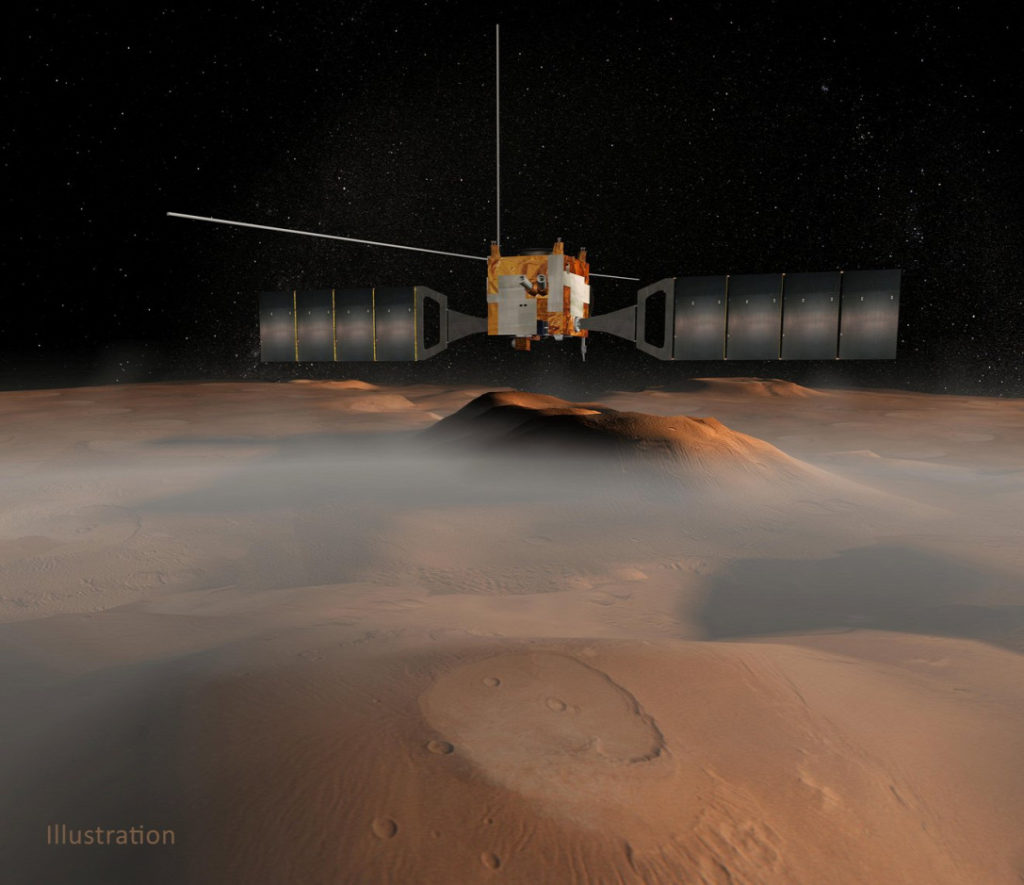
Az ESA Mars Express űrszondájának művészi ábrája
Forrás: NASA/ESA/JPL/CALTECH
Teljes sikerrel zárult az űrbéli kommunikációs teszt
A kínai Csu-zsung marsjáró mintegy 4000 kilométeres távolságból adatokat küldött a Mars Expressnek, kommunikációjuk 10 percen át tartott. A Mars Express fogadta az adatokat és továbbította az ESA mélyűri nyomkövető állomására. Az állomás az adatokat az ESA Európai Repülésirányító Központjába (Esoc) küldte, amely továbbította a Pekingi Repülésirányító Központba.
Az adatelemzés szerint a Csu-zsung és a Mars Express kommunikációs interfész-egységei összehangolódtak, megfelelnek a nemzetközi sztenderdeknek, a továbbított adatok teljesek és helyesek voltak. A Tienven-1 és a Mars Express csapata tovább dolgozik a tudományos adatközlő kommunikáció tökéletesítésén.
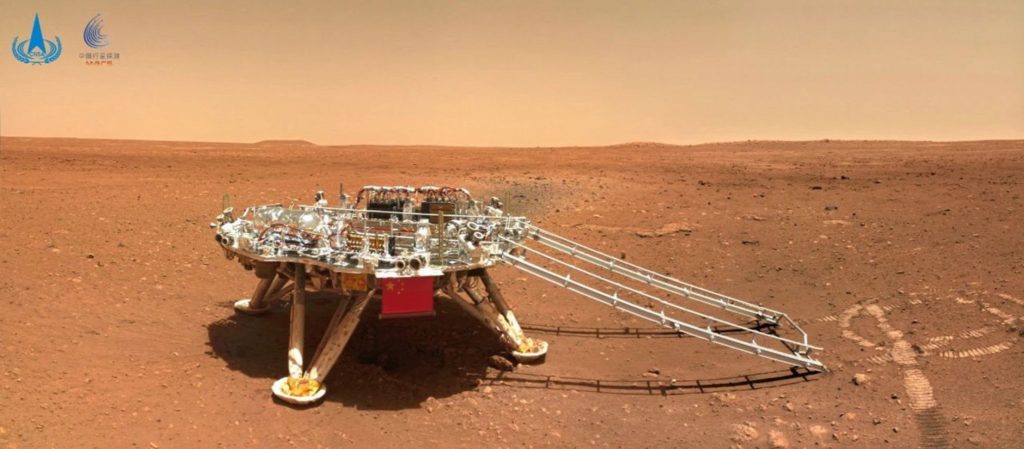
A Csu-Zsung marsjáró által készített felvétel az űrszondáról levezető rámpáról és a marsjáró keréknyomairól a Marson
Forrás: MTI/EPA/CNSA/- Folyamatosan küldik az adatokat
A Tienven-1 űrszonda tíz hónapon át tartó utazást követően érte el a vörös bolygót, ahol leszállóegysége május 15-én hajtott végre sikeres landolást.
A kínai mitológia egyik ősi tűzistenéről elnevezett Csu-zsung marsjárót a Földdel kapcsolatot tartó Tienven-1-ről irányítják.
A jármű a Mars légkörének és talajának vizsgálata mellett felvételeket is készít a vörös bolygóról és feltérképezi az Utopia Planitia nevű síkság környékét. Az Európai Űrügynökség (ESA) 2003 nyarán indította útnak Mars Express nevű szondáját, amely decemberben kezdte meg a bolygó körüli keringését és azóta gyűjt adatokat és készít felvételeket a Marsról.
(MTI/Hszinhua/Origo)
[type] => post
[excerpt] => A kínai Tienven–1 űrszonda és az Európai Űrügynökség (ESA) Mars Express nevű űreszköze sikeres kommunikációs tesztet hajtott végre a Mars körüli pályán – jelentette be a Kínai Nemzeti Űrügynökség (CNSA) szerdán.
[autID] => 5
[date] => Array
(
[created] => 1638440580
[modified] => 1638399280
)
[title] => A kínai és az európai űrszonda sikeres kommunikációs tesztet hajtott végre a Mars körül
[url] => https://life.karpat.in.ua/?p=81401&lang=hu
[status] => publish
[translations] => Array
(
[hu] => 81401
[uk] => 81566
)
[aut] => gygabriella
[lang] => hu
[image_id] => 81403
[image] => Array
(
[id] => 81403
[original] => https://life.karpat.in.ua/wp-content/uploads/2021/12/2021061158.jpg
[original_lng] => 233258
[original_w] => 1880
[original_h] => 824
[sizes] => Array
(
[thumbnail] => Array
(
[url] => https://life.karpat.in.ua/wp-content/uploads/2021/12/2021061158-150x150.jpg
[width] => 150
[height] => 150
)
[medium] => Array
(
[url] => https://life.karpat.in.ua/wp-content/uploads/2021/12/2021061158-300x131.jpg
[width] => 300
[height] => 131
)
[medium_large] => Array
(
[url] => https://life.karpat.in.ua/wp-content/uploads/2021/12/2021061158-768x337.jpg
[width] => 768
[height] => 337
)
[large] => Array
(
[url] => https://life.karpat.in.ua/wp-content/uploads/2021/12/2021061158-1024x449.jpg
[width] => 1024
[height] => 449
)
[1536x1536] => Array
(
[url] => https://life.karpat.in.ua/wp-content/uploads/2021/12/2021061158-1536x673.jpg
[width] => 1536
[height] => 673
)
[2048x2048] => Array
(
[url] => https://life.karpat.in.ua/wp-content/uploads/2021/12/2021061158.jpg
[width] => 1880
[height] => 824
)
[full] => Array
(
[url] => https://life.karpat.in.ua/wp-content/uploads/2021/12/2021061158.jpg
[width] => 1880
[height] => 824
)
)
)
[video] =>
[comments_count] => 0
[domain] => Array
(
[hid] => life
[color] => red
[title] => Життя
)
[_edit_lock] => 1638515953:2
[_thumbnail_id] => 81403
[_edit_last] => 5
[translation_required] => 2
[views_count] => 4152
[translation_required_done] => 1
[_oembed_7c07626aad80315cbfe968a9319c2b22] => Oh, this is amazing. Close to tears. Ourspace has published an update on the "mystery hut" and it's so underwhelming it's brilliant. It's just a small rock on a crater rim that they're now calling "jade rabbit" for its appearance. Source: https://t.co/frrMKH7RWM https://t.co/GFCIRzqmDu pic.twitter.com/jpDLDS8TZu
— Andrew Jones (@AJ_FI) January 7, 2022
[_oembed_time_7c07626aad80315cbfe968a9319c2b22] => 1642770148
[_oembed_32ad9bceb80ac416f137edab8bd4d590] =>
[_oembed_time_32ad9bceb80ac416f137edab8bd4d590] => 1646841375
[_oembed_7bc330963e31d1d74790bcca9101ce07] =>
[_oembed_time_7bc330963e31d1d74790bcca9101ce07] => 1646841376
[_oembed_69c7a6f3422bc2baabcc41024424858a] => China National Space Administration releases latest high-definition Mars images taken and sent back by #Zhurong, the country's first Mars rover. #Tianwen1 #Tianwen #祝融 #天问 pic.twitter.com/64wVWYs8jF
— WatchTower 环球瞭望台 (@WatchTowerGW) June 11, 2021
[_oembed_time_69c7a6f3422bc2baabcc41024424858a] => 1646841376
[_oembed_46abdc17400367dbbca951f7f8c533b3] => A tri of dust devils in Jezero Crater caught on camera by @NASAPersevere on sol 372 pic.twitter.com/bFd9BMp24D
— Kevin M. Gill (@kevinmgill) March 10, 2022
[_oembed_time_46abdc17400367dbbca951f7f8c533b3] => 1647937340
[_oembed_20ce5ecb79e31c6e14d8a9c485b3cd67] =>
[_oembed_time_20ce5ecb79e31c6e14d8a9c485b3cd67] => 1649011297
[_oembed_de2cab78f30097905fa3838a24f05e3e] =>
[_oembed_time_de2cab78f30097905fa3838a24f05e3e] => 1650282644
[_oembed_f73389d4a56b6973b8ef21bf5a795789] =>
[_oembed_time_f73389d4a56b6973b8ef21bf5a795789] => 1670411134
[_oembed_30289a69c4d7f7f6ef6d4ffb3c78045a] =>
[_oembed_time_30289a69c4d7f7f6ef6d4ffb3c78045a] => 1672303600
[_oembed_c83cdc68b8594ac42423c3625f50d353] =>
[_oembed_time_c83cdc68b8594ac42423c3625f50d353] => 1672303601
[_oembed_b17ac91756745e69382f928dd2bb3301] => Splashdown!#Crew5 is back on Earth, completing a science mission of nearly six months on the @Space_Station. Their @SpaceX Dragon Endurance spacecraft touched down at 9:02pm ET (0202 UTC March 12) near Tampa off the coast of Florida. pic.twitter.com/nLMC0hbKY4
— NASA (@NASA) March 12, 2023
[_oembed_time_b17ac91756745e69382f928dd2bb3301] => 1679250392
[_oembed_6d80054a2a165daa3b00545a76d7a2e6] => Starship is ready for launch ?
Awaiting regulatory approval
— Elon Musk (@elonmusk) April 9, 2023
[_oembed_time_6d80054a2a165daa3b00545a76d7a2e6] => 1681811092
[_oembed_eab5644198e7637d4f057ae939d6a551] => Starship fully stacked at Starbase. Team is working towards a launch rehearsal next week followed by Starship’s first integrated flight test ~week later pending regulatory approval pic.twitter.com/9VbJLppswp
— SpaceX (@SpaceX) April 6, 2023
[_oembed_time_eab5644198e7637d4f057ae939d6a551] => 1681811092
[_oembed_14b1e1b6e4a236b4ff4ed4943ee02393] => Japan's 'Moon Sniper' probe attempts historic soft-landing on lunar surface. But did it make it? https://t.co/gOXn5EHViM pic.twitter.com/nubTr6hXg6
— SPACE.com (@SPACEdotcom) January 19, 2024
[_oembed_time_14b1e1b6e4a236b4ff4ed4943ee02393] => 1707468375
[_oembed_fe4db60f7a6fafd99783aee7b80d4da0] => Japan's 'Moon Sniper' probe attempts historic soft-landing on lunar surface. But did it make it? https://t.co/gOXn5EHViM pic.twitter.com/nubTr6hXg6
— SPACE.com (@SPACEdotcom) January 19, 2024
[_oembed_time_fe4db60f7a6fafd99783aee7b80d4da0] => 1720276023
[_oembed_10a812f7c83641a3ae60ce61420ff494] => Starship is ready for launch 🚀
Awaiting regulatory approval
— Elon Musk (@elonmusk) April 9, 2023
[_oembed_time_10a812f7c83641a3ae60ce61420ff494] => 1720276023
[_oembed_cb76a33d4042f3b100e75479a14d80d4] => Starship fully stacked at Starbase. Team is working towards a launch rehearsal next week followed by Starship’s first integrated flight test ~week later pending regulatory approval pic.twitter.com/9VbJLppswp
— SpaceX (@SpaceX) April 6, 2023
[_oembed_time_cb76a33d4042f3b100e75479a14d80d4] => 1720276024
[_oembed_06114a40a061dc278569ea3838222ab2] => Splashdown!#Crew5 is back on Earth, completing a science mission of nearly six months on the @Space_Station. Their @SpaceX Dragon Endurance spacecraft touched down at 9:02pm ET (0202 UTC March 12) near Tampa off the coast of Florida. pic.twitter.com/nLMC0hbKY4
— NASA (@NASA) March 12, 2023
[_oembed_time_06114a40a061dc278569ea3838222ab2] => 1720276024
[_oembed_bc17f1eab101793dd9976c69cd8d5970] =>
[_oembed_time_bc17f1eab101793dd9976c69cd8d5970] => 1720276024
[_oembed_f6bd2434ef73e6cfeec62163dbfa0375] =>
[_oembed_time_f6bd2434ef73e6cfeec62163dbfa0375] => 1720276024
[_oembed_c88148efbe1c9c8d5c12f0136891b3ab] =>
[_oembed_time_c88148efbe1c9c8d5c12f0136891b3ab] => 1720276024
[_oembed_f9ae9abb0d4fce11c520b492a5fcd1c5] => NASA just released the clearest view of Mars ever. (sound of Mars)
pic.twitter.com/XNIYJ0f15R
— Science (@ScienceGuys_) June 17, 2024
[_oembed_time_f9ae9abb0d4fce11c520b492a5fcd1c5] => 1720497489
[_oembed_440574682d7908d345f472dfaf912003] => Falcon 9 launches 21 @Starlink satellites to low-Earth orbit from Florida pic.twitter.com/PoDEjGYGSM
— SpaceX (@SpaceX) August 28, 2024
[_oembed_time_440574682d7908d345f472dfaf912003] => 1726411891
[_oembed_399ad795235db89e01f77babb17efbf2] =>
[_oembed_time_399ad795235db89e01f77babb17efbf2] => 1730806553
[_oembed_41ce0c70bfdb74e7fff3a4ae8583e2e4] => Russia’s new plasma engine could reach Mars in just 30 days.
Russia's new plasma rocket engine is engineered to cut the transit time to Mars from 7 months down to between 30 and 60 days.
This device uses magnetic forces to speed up charged hydrogen particles to nearly 100 km/s… pic.twitter.com/S20us6N1RI
— Astro Joel (@JoelWard2000) February 11, 2025
[_oembed_time_41ce0c70bfdb74e7fff3a4ae8583e2e4] => 1740824481
[_oembed_e822a8fdebda26b41a4c18f4cac727eb] => 🇷🇺 RUSSIA's NEW PLASMA ENGINE COULD REDUCE MARS 🔴 TRAVEL TIME TO 30 DAYS!
A faster journey to Mars would not only increase efficiency but also minimize the risks associated with prolonged exposure to cosmic radiation for astronauts.
The plasma engine utilizes hydrogen as… pic.twitter.com/lTGtVYzmaA
— Brian Basson (@BassonBrain) February 9, 2025
[_oembed_time_e822a8fdebda26b41a4c18f4cac727eb] => 1740824482
[_oembed_0f2acd7bdc22e7446b5b836eea45cfbb] => Russia’s plasma engine could reach Mars in 30 days, drastically reduce space travel timehttps://t.co/JogHCC1pu9
— Interesting Engineering (@IntEngineering) February 9, 2025
[_oembed_time_0f2acd7bdc22e7446b5b836eea45cfbb] => 1740824482
[_algolia_sync] => 508148107000
[_oembed_49f4185d315233c75548f2d327f4df59] =>
[_oembed_time_49f4185d315233c75548f2d327f4df59] => 1747382679
[_oembed_273975bb088f4d85fb50260c557daba5] => Congratulations to the @SpaceX and @NASA teams for another safe astronaut return!
Thank you to @POTUS for prioritizing this mission! https://t.co/KknFDbh59s
— gorklon rust (@elonmusk) March 18, 2025
[_oembed_time_273975bb088f4d85fb50260c557daba5] => 1747382679
[_oembed_0b0cc652990099d1ddcd819a1c571548] =>
[_oembed_time_0b0cc652990099d1ddcd819a1c571548] => 1774262044
[labels] => Array
(
)
[categories] => Array
(
[0] => 15
[1] => 41
[2] => 49
[3] => 598
[4] => 39
)
[categories_name] => Array
(
[0] => A nap hírei
[1] => Cikkek
[2] => Hírek
[3] => Tudomány
[4] => Világ
)
[tags] => Array
(
[0] => 10322
[1] => 12687
[2] => 2184
)
[tags_name] => Array
(
[0] => Mars
[1] => marsjáró
[2] => Űrkutatás
)
)
[6] => Array
(
[id] => 73592
[content] =>
Október közepéig szüneteltetni fogja a kommunikációt a vörös bolygón lévő marsjáróival a NASA a bolygók együttállása miatt, amikor a Nap a Föld és a Mars között tartózkodik – jelentette be az amerikai űrkutatási hivatal (NASA) .

Bár a mérnökök nem fognak utasításokat küldeni, a missziók folytatják az adatgyűjtést a Marson a bolygók együttállása idején is, amely kétévente következik be.
A bolygók együttállása idején a Napból kilövellt gázok zavarhatják a rádiójeleket, amikor a mérnökök megpróbálnak kommunikálni a marsjárókkal. Ez elronthatja az utasításokat és az űreszközök „váratlan magatartását” eredményezheti – közölte a NASA bolygókutató intézete (JPL).
„Bár marsmisszióink nem lesznek olyan tevékenyek ebben a néhány hétben, állapotukat tudatni fogják velünk. Mindegyik misszió kapott tőlünk házi feladatot, amelyet meg kell csinálniuk, amíg nem hallanak felőlünk” – mondta Roy Gladden, az intézet marsi jelfogóhálózatának igazgatója.
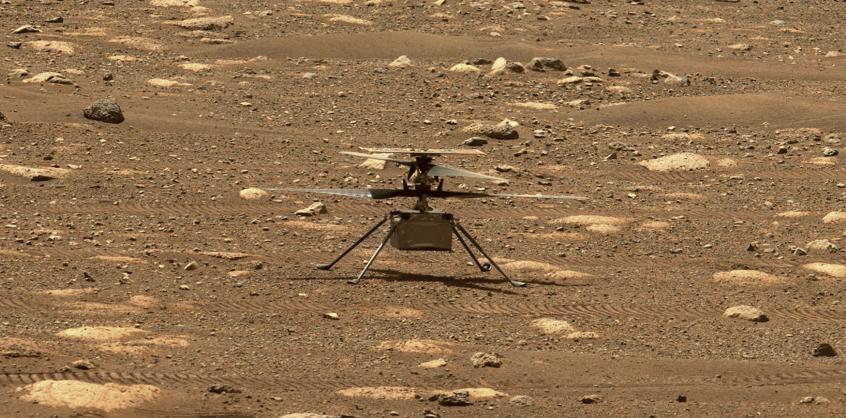
A Perseverance és a Curiosity marsjárók jegyezni fogják egyebek között az időjárási és sugárzási adatokat, a kicsiny Ingenuity helikopter pedig jelenlegi landolási helyén marad.
Az InSight marsszonda használni fogja a marsrengéseket érzékelő szeizmométerét.
A NASA Mars körül keringő szondái, az Odyssey, a Mars Reconnaissance Orbiter és a MAVEN fognak továbbítani bizonyos adatokat a földi irányítóközpontba, miközben folytatják saját kutatásaikat.
MTI
[type] => post
[excerpt] => Október közepéig szüneteltetni fogja a kommunikációt a vörös bolygón lévő marsjáróival a NASA a bolygók együttállása miatt, amikor a Nap a Föld és a Mars között tartózkodik - jelentette be az amerikai űrkutatási hivatal (NASA) .
[autID] => 10
[date] => Array
(
[created] => 1632950400
[modified] => 1632914379
)
[title] => Szünetelteti marsjárói földi irányítását a NASA
[url] => https://life.karpat.in.ua/?p=73592&lang=hu
[status] => publish
[translations] => Array
(
[hu] => 73592
)
[aut] => nyesi
[lang] => hu
[image_id] => 73593
[image] => Array
(
[id] => 73593
[original] => https://life.karpat.in.ua/wp-content/uploads/2021/09/marsjaro.jpg
[original_lng] => 75892
[original_w] => 700
[original_h] => 394
[sizes] => Array
(
[thumbnail] => Array
(
[url] => https://life.karpat.in.ua/wp-content/uploads/2021/09/marsjaro-150x150.jpg
[width] => 150
[height] => 150
)
[medium] => Array
(
[url] => https://life.karpat.in.ua/wp-content/uploads/2021/09/marsjaro-300x169.jpg
[width] => 300
[height] => 169
)
[medium_large] => Array
(
[url] => https://life.karpat.in.ua/wp-content/uploads/2021/09/marsjaro.jpg
[width] => 700
[height] => 394
)
[large] => Array
(
[url] => https://life.karpat.in.ua/wp-content/uploads/2021/09/marsjaro.jpg
[width] => 700
[height] => 394
)
[1536x1536] => Array
(
[url] => https://life.karpat.in.ua/wp-content/uploads/2021/09/marsjaro.jpg
[width] => 700
[height] => 394
)
[2048x2048] => Array
(
[url] => https://life.karpat.in.ua/wp-content/uploads/2021/09/marsjaro.jpg
[width] => 700
[height] => 394
)
[full] => Array
(
[url] => https://life.karpat.in.ua/wp-content/uploads/2021/09/marsjaro.jpg
[width] => 700
[height] => 394
)
)
)
[video] =>
[comments_count] => 0
[domain] => Array
(
[hid] => life
[color] => red
[title] => Життя
)
[_edit_lock] => 1632903581:10
[_thumbnail_id] => 73593
[_edit_last] => 10
[views_count] => 3245
[_oembed_7c07626aad80315cbfe968a9319c2b22] => Oh, this is amazing. Close to tears. Ourspace has published an update on the "mystery hut" and it's so underwhelming it's brilliant. It's just a small rock on a crater rim that they're now calling "jade rabbit" for its appearance. Source: https://t.co/frrMKH7RWM https://t.co/GFCIRzqmDu pic.twitter.com/jpDLDS8TZu
— Andrew Jones (@AJ_FI) January 7, 2022
[_oembed_time_7c07626aad80315cbfe968a9319c2b22] => 1642232224
[_oembed_69c7a6f3422bc2baabcc41024424858a] => China National Space Administration releases latest high-definition Mars images taken and sent back by #Zhurong, the country's first Mars rover. #Tianwen1 #Tianwen #祝融 #天问 pic.twitter.com/64wVWYs8jF
— WatchTower 环球瞭望台 (@WatchTowerGW) June 11, 2021
[_oembed_time_69c7a6f3422bc2baabcc41024424858a] => 1647778651
[_oembed_20ce5ecb79e31c6e14d8a9c485b3cd67] =>
[_oembed_time_20ce5ecb79e31c6e14d8a9c485b3cd67] => 1647778651
[_oembed_46abdc17400367dbbca951f7f8c533b3] => A tri of dust devils in Jezero Crater caught on camera by @NASAPersevere on sol 372 pic.twitter.com/bFd9BMp24D
— Kevin M. Gill (@kevinmgill) March 10, 2022
[_oembed_time_46abdc17400367dbbca951f7f8c533b3] => 1648412315
[_oembed_900f11f1e55d3efa4c482171c0d3102d] =>
[_oembed_time_900f11f1e55d3efa4c482171c0d3102d] => 1648854807
[_oembed_de2cab78f30097905fa3838a24f05e3e] =>
[_oembed_time_de2cab78f30097905fa3838a24f05e3e] => 1649746626
[_oembed_f73389d4a56b6973b8ef21bf5a795789] =>
[_oembed_time_f73389d4a56b6973b8ef21bf5a795789] => 1670410456
[_oembed_30289a69c4d7f7f6ef6d4ffb3c78045a] =>
[_oembed_time_30289a69c4d7f7f6ef6d4ffb3c78045a] => 1675098779
[_oembed_c83cdc68b8594ac42423c3625f50d353] =>
[_oembed_time_c83cdc68b8594ac42423c3625f50d353] => 1675098780
[_oembed_b17ac91756745e69382f928dd2bb3301] => Splashdown!#Crew5 is back on Earth, completing a science mission of nearly six months on the @Space_Station. Their @SpaceX Dragon Endurance spacecraft touched down at 9:02pm ET (0202 UTC March 12) near Tampa off the coast of Florida. pic.twitter.com/nLMC0hbKY4
— NASA (@NASA) March 12, 2023
[_oembed_time_b17ac91756745e69382f928dd2bb3301] => 1679044026
[_oembed_6d80054a2a165daa3b00545a76d7a2e6] => Starship is ready for launch ?
Awaiting regulatory approval
— Elon Musk (@elonmusk) April 9, 2023
[_oembed_time_6d80054a2a165daa3b00545a76d7a2e6] => 1681997050
[_oembed_eab5644198e7637d4f057ae939d6a551] => Starship fully stacked at Starbase. Team is working towards a launch rehearsal next week followed by Starship’s first integrated flight test ~week later pending regulatory approval pic.twitter.com/9VbJLppswp
— SpaceX (@SpaceX) April 6, 2023
[_oembed_time_eab5644198e7637d4f057ae939d6a551] => 1681997050
[_oembed_14b1e1b6e4a236b4ff4ed4943ee02393] => Japan's 'Moon Sniper' probe attempts historic soft-landing on lunar surface. But did it make it? https://t.co/gOXn5EHViM pic.twitter.com/nubTr6hXg6
— SPACE.com (@SPACEdotcom) January 19, 2024
[_oembed_time_14b1e1b6e4a236b4ff4ed4943ee02393] => 1706773629
[_oembed_fe4db60f7a6fafd99783aee7b80d4da0] => Japan's 'Moon Sniper' probe attempts historic soft-landing on lunar surface. But did it make it? https://t.co/gOXn5EHViM pic.twitter.com/nubTr6hXg6
— SPACE.com (@SPACEdotcom) January 19, 2024
[_oembed_time_fe4db60f7a6fafd99783aee7b80d4da0] => 1719934603
[_oembed_10a812f7c83641a3ae60ce61420ff494] => Starship is ready for launch 🚀
Awaiting regulatory approval
— Elon Musk (@elonmusk) April 9, 2023
[_oembed_time_10a812f7c83641a3ae60ce61420ff494] => 1719934603
[_oembed_cb76a33d4042f3b100e75479a14d80d4] => Starship fully stacked at Starbase. Team is working towards a launch rehearsal next week followed by Starship’s first integrated flight test ~week later pending regulatory approval pic.twitter.com/9VbJLppswp
— SpaceX (@SpaceX) April 6, 2023
[_oembed_time_cb76a33d4042f3b100e75479a14d80d4] => 1719934603
[_oembed_06114a40a061dc278569ea3838222ab2] => Splashdown!#Crew5 is back on Earth, completing a science mission of nearly six months on the @Space_Station. Their @SpaceX Dragon Endurance spacecraft touched down at 9:02pm ET (0202 UTC March 12) near Tampa off the coast of Florida. pic.twitter.com/nLMC0hbKY4
— NASA (@NASA) March 12, 2023
[_oembed_time_06114a40a061dc278569ea3838222ab2] => 1719934604
[_oembed_bc17f1eab101793dd9976c69cd8d5970] =>
[_oembed_time_bc17f1eab101793dd9976c69cd8d5970] => 1719934604
[_oembed_f6bd2434ef73e6cfeec62163dbfa0375] =>
[_oembed_time_f6bd2434ef73e6cfeec62163dbfa0375] => 1719934604
[_oembed_c88148efbe1c9c8d5c12f0136891b3ab] =>
[_oembed_time_c88148efbe1c9c8d5c12f0136891b3ab] => 1719934604
[_oembed_f9ae9abb0d4fce11c520b492a5fcd1c5] => NASA just released the clearest view of Mars ever. (sound of Mars)
pic.twitter.com/XNIYJ0f15R
— Science (@ScienceGuys_) June 17, 2024
[_oembed_time_f9ae9abb0d4fce11c520b492a5fcd1c5] => 1720867380
[_oembed_440574682d7908d345f472dfaf912003] => Falcon 9 launches 21 @Starlink satellites to low-Earth orbit from Florida pic.twitter.com/PoDEjGYGSM
— SpaceX (@SpaceX) August 28, 2024
[_oembed_time_440574682d7908d345f472dfaf912003] => 1725689990
[_oembed_399ad795235db89e01f77babb17efbf2] =>
[_oembed_time_399ad795235db89e01f77babb17efbf2] => 1732535831
[_oembed_41ce0c70bfdb74e7fff3a4ae8583e2e4] => Russia’s new plasma engine could reach Mars in just 30 days.
Russia's new plasma rocket engine is engineered to cut the transit time to Mars from 7 months down to between 30 and 60 days.
This device uses magnetic forces to speed up charged hydrogen particles to nearly 100 km/s… pic.twitter.com/S20us6N1RI
— Astro Joel (@JoelWard2000) February 11, 2025
[_oembed_time_41ce0c70bfdb74e7fff3a4ae8583e2e4] => 1740744963
[_oembed_e822a8fdebda26b41a4c18f4cac727eb] => 🇷🇺 RUSSIA's NEW PLASMA ENGINE COULD REDUCE MARS 🔴 TRAVEL TIME TO 30 DAYS!
A faster journey to Mars would not only increase efficiency but also minimize the risks associated with prolonged exposure to cosmic radiation for astronauts.
The plasma engine utilizes hydrogen as… pic.twitter.com/lTGtVYzmaA
— Brian Basson (@BassonBrain) February 9, 2025
[_oembed_time_e822a8fdebda26b41a4c18f4cac727eb] => 1740744963
[_oembed_0f2acd7bdc22e7446b5b836eea45cfbb] => Russia’s plasma engine could reach Mars in 30 days, drastically reduce space travel timehttps://t.co/JogHCC1pu9
— Interesting Engineering (@IntEngineering) February 9, 2025
[_oembed_time_0f2acd7bdc22e7446b5b836eea45cfbb] => 1740744963
[_algolia_sync] => 1202753171001
[_oembed_273975bb088f4d85fb50260c557daba5] => Congratulations to the @SpaceX and @NASA teams for another safe astronaut return!
Thank you to @POTUS for prioritizing this mission! https://t.co/KknFDbh59s
— Elon Musk (@elonmusk) March 18, 2025
[_oembed_time_273975bb088f4d85fb50260c557daba5] => 1744795458
[_oembed_49f4185d315233c75548f2d327f4df59] =>
[_oembed_time_49f4185d315233c75548f2d327f4df59] => 1746426853
[_oembed_0b0cc652990099d1ddcd819a1c571548] =>
[_oembed_time_0b0cc652990099d1ddcd819a1c571548] => 1774610508
[labels] => Array
(
)
[categories] => Array
(
[0] => 41
[1] => 49
[2] => 598
)
[categories_name] => Array
(
[0] => Cikkek
[1] => Hírek
[2] => Tudomány
)
[tags] => Array
(
[0] => 10322
[1] => 38029
[2] => 2184
)
[tags_name] => Array
(
[0] => Mars
[1] => mars űrszonda
[2] => Űrkutatás
)
)
[7] => Array
(
[id] => 70010
[content] =>
A Jezero-kráterben a tudósok szerint 3,5 milliárd éve egy mély tó terült el, olyan környezettel, amely megteremthette a földönkívüli élet feltételeit.
Begyűjtötte az első kőzetmintát a vörös bolygón az amerikai űrkutatási hivatal (NASA) Perseverance marsjárója az után, hogy a múlt hónapban az első mintavétele sikertelennek bizonyult. Adam Stelzner, a marsjáró főmérnöke szerint „tökéletes kőzetmintát” sikerült begyűjteni.
„Soha nem voltam annál boldogabb, mint amikor megláttam egy lyukat egy kőben” – írta Twitter-üzenetében. Múlt hónapban a Perseverance egy szokatlanul puha, porszerű talajréteget fúrt meg, és a minta szétporladt, vagy a töredékek eleve a furatban maradtak, illetve kihullottak a begyűjtéskor, így nem tudott semmit abba a gyűjtőcsőbe helyezni, amelyben majdan a Földre hozzák azt.
A marsjáró azóta mintegy 800 méter megtéve egy jobb mintavételi helyre vándorolt, ahol megpróbálta az újabb mintagyűjtést. A misszió irányítói elemezték a marsjáró által küldött adatokat és felvételeket az előtt, hogy bejelentették a sikeres talajmintagyűjtést. A kutatási program 31 kőzetminta gyűjtését irányozza elő, ezek a tervek szerint néhány év múlva érkeznek vissza a Földre elemzésre.
A kutatás célja az ősi élet jeleinek, például megkövesedett mikrobák nyomainak kutatása a Mars földrajzának alaposabb megismerése céljából. A marsjárót egy éve indították útjára Floridából. A városi terepjáró méretű modul februárban szállt le a Marson, a Jezero-kráterben, amelyben a tudósok szerint 3,5 milliárd éve egy mély tó terült el, olyan környezettel, amely megteremthette a földönkívüli élet feltételeit.
Forrás: 168.hu
[type] => post
[excerpt] => A Jezero-kráterben a tudósok szerint 3,5 milliárd éve egy mély tó terült el, olyan környezettel, amely megteremthette a földönkívüli élet feltételeit.
[autID] => 4
[date] => Array
(
[created] => 1630703040
[modified] => 1630627826
)
[title] => Sikeresen begyűjtötte az első kőzetmintát a vörös bolygón a NASA marsjárója
[url] => https://life.karpat.in.ua/?p=70010&lang=hu
[status] => publish
[translations] => Array
(
[hu] => 70010
)
[aut] => avecsorinszka
[lang] => hu
[image_id] => 70011
[image] => Array
(
[id] => 70011
[original] => https://life.karpat.in.ua/wp-content/uploads/2021/09/000-97p3xk-copy-focuspointscale-w846-h418-fx0-fy0.jpg
[original_lng] => 91590
[original_w] => 846
[original_h] => 418
[sizes] => Array
(
[thumbnail] => Array
(
[url] => https://life.karpat.in.ua/wp-content/uploads/2021/09/000-97p3xk-copy-focuspointscale-w846-h418-fx0-fy0-150x150.jpg
[width] => 150
[height] => 150
)
[medium] => Array
(
[url] => https://life.karpat.in.ua/wp-content/uploads/2021/09/000-97p3xk-copy-focuspointscale-w846-h418-fx0-fy0-300x148.jpg
[width] => 300
[height] => 148
)
[medium_large] => Array
(
[url] => https://life.karpat.in.ua/wp-content/uploads/2021/09/000-97p3xk-copy-focuspointscale-w846-h418-fx0-fy0-768x379.jpg
[width] => 768
[height] => 379
)
[large] => Array
(
[url] => https://life.karpat.in.ua/wp-content/uploads/2021/09/000-97p3xk-copy-focuspointscale-w846-h418-fx0-fy0.jpg
[width] => 846
[height] => 418
)
[1536x1536] => Array
(
[url] => https://life.karpat.in.ua/wp-content/uploads/2021/09/000-97p3xk-copy-focuspointscale-w846-h418-fx0-fy0.jpg
[width] => 846
[height] => 418
)
[2048x2048] => Array
(
[url] => https://life.karpat.in.ua/wp-content/uploads/2021/09/000-97p3xk-copy-focuspointscale-w846-h418-fx0-fy0.jpg
[width] => 846
[height] => 418
)
[full] => Array
(
[url] => https://life.karpat.in.ua/wp-content/uploads/2021/09/000-97p3xk-copy-focuspointscale-w846-h418-fx0-fy0.jpg
[width] => 846
[height] => 418
)
)
)
[video] =>
[comments_count] => 0
[domain] => Array
(
[hid] => life
[color] => red
[title] => Життя
)
[_edit_lock] => 1630617136:4
[_thumbnail_id] => 70011
[_edit_last] => 4
[views_count] => 3126
[_oembed_32ad9bceb80ac416f137edab8bd4d590] =>
[_oembed_time_32ad9bceb80ac416f137edab8bd4d590] => 1630692250
[_oembed_7bc330963e31d1d74790bcca9101ce07] =>
[_oembed_time_7bc330963e31d1d74790bcca9101ce07] => 1630692250
[_oembed_69c7a6f3422bc2baabcc41024424858a] => China National Space Administration releases latest high-definition Mars images taken and sent back by #Zhurong, the country's first Mars rover. #Tianwen1 #Tianwen #祝融 #天问 pic.twitter.com/64wVWYs8jF
— WatchTower (@WatchTowerGW) June 11, 2021
[_oembed_time_69c7a6f3422bc2baabcc41024424858a] => 1630692251
[_oembed_20ce5ecb79e31c6e14d8a9c485b3cd67] =>
[_oembed_time_20ce5ecb79e31c6e14d8a9c485b3cd67] => 1630692251
[_oembed_d24940bcec265c875e6d74d100b24516] =>
[_oembed_time_d24940bcec265c875e6d74d100b24516] => 1630692251
[_oembed_81af775bc46493cba97ef2619304b72e] =>
[_oembed_time_81af775bc46493cba97ef2619304b72e] => 1633984980
[_oembed_19bb71a809c3df2177b814468094d2de] =>
[_oembed_time_19bb71a809c3df2177b814468094d2de] => 1633984980
[_oembed_46abdc17400367dbbca951f7f8c533b3] => A tri of dust devils in Jezero Crater caught on camera by @NASAPersevere on sol 372 pic.twitter.com/bFd9BMp24D
— Kevin M. Gill (@kevinmgill) March 10, 2022
[_oembed_time_46abdc17400367dbbca951f7f8c533b3] => 1648564359
[_oembed_de2cab78f30097905fa3838a24f05e3e] =>
[_oembed_time_de2cab78f30097905fa3838a24f05e3e] => 1649743021
[_oembed_f73389d4a56b6973b8ef21bf5a795789] =>
[_oembed_time_f73389d4a56b6973b8ef21bf5a795789] => 1670512630
[_oembed_6d80054a2a165daa3b00545a76d7a2e6] => Starship is ready for launch ?
Awaiting regulatory approval
— Elon Musk (@elonmusk) April 9, 2023
[_oembed_time_6d80054a2a165daa3b00545a76d7a2e6] => 1681808142
[_oembed_eab5644198e7637d4f057ae939d6a551] => Starship fully stacked at Starbase. Team is working towards a launch rehearsal next week followed by Starship’s first integrated flight test ~week later pending regulatory approval pic.twitter.com/9VbJLppswp
— SpaceX (@SpaceX) April 6, 2023
[_oembed_time_eab5644198e7637d4f057ae939d6a551] => 1681808142
[_oembed_10a812f7c83641a3ae60ce61420ff494] => Starship is ready for launch 🚀
Awaiting regulatory approval
— Elon Musk (@elonmusk) April 9, 2023
[_oembed_time_10a812f7c83641a3ae60ce61420ff494] => 1719613190
[_oembed_cb76a33d4042f3b100e75479a14d80d4] => Starship fully stacked at Starbase. Team is working towards a launch rehearsal next week followed by Starship’s first integrated flight test ~week later pending regulatory approval pic.twitter.com/9VbJLppswp
— SpaceX (@SpaceX) April 6, 2023
[_oembed_time_cb76a33d4042f3b100e75479a14d80d4] => 1719613190
[_oembed_c88148efbe1c9c8d5c12f0136891b3ab] =>
[_oembed_time_c88148efbe1c9c8d5c12f0136891b3ab] => 1719613190
[_oembed_fb00ea73631483fce2d4abf7ab0c1d60] =>
[_oembed_time_fb00ea73631483fce2d4abf7ab0c1d60] => 1719613190
[_oembed_f9ae9abb0d4fce11c520b492a5fcd1c5] => NASA just released the clearest view of Mars ever. (sound of Mars)
pic.twitter.com/XNIYJ0f15R
— Science (@ScienceGuys_) June 17, 2024
[_oembed_time_f9ae9abb0d4fce11c520b492a5fcd1c5] => 1721119903
[_oembed_399ad795235db89e01f77babb17efbf2] =>
[_oembed_time_399ad795235db89e01f77babb17efbf2] => 1729945870
[_oembed_41ce0c70bfdb74e7fff3a4ae8583e2e4] => Russia’s new plasma engine could reach Mars in just 30 days.
Russia's new plasma rocket engine is engineered to cut the transit time to Mars from 7 months down to between 30 and 60 days.
This device uses magnetic forces to speed up charged hydrogen particles to nearly 100 km/s… pic.twitter.com/S20us6N1RI
— Astro Joel (@JoelWard2000) February 11, 2025
[_oembed_time_41ce0c70bfdb74e7fff3a4ae8583e2e4] => 1740415911
[_oembed_e822a8fdebda26b41a4c18f4cac727eb] => 🇷🇺 RUSSIA's NEW PLASMA ENGINE COULD REDUCE MARS 🔴 TRAVEL TIME TO 30 DAYS!
A faster journey to Mars would not only increase efficiency but also minimize the risks associated with prolonged exposure to cosmic radiation for astronauts.
The plasma engine utilizes hydrogen as… pic.twitter.com/lTGtVYzmaA
— Brian Basson (@BassonBrain) February 9, 2025
[_oembed_time_e822a8fdebda26b41a4c18f4cac727eb] => 1740415912
[_oembed_0f2acd7bdc22e7446b5b836eea45cfbb] => Russia’s plasma engine could reach Mars in 30 days, drastically reduce space travel timehttps://t.co/JogHCC1pu9
— Interesting Engineering (@IntEngineering) February 9, 2025
[_oembed_time_0f2acd7bdc22e7446b5b836eea45cfbb] => 1740415912
[_algolia_sync] => 508095218000
[labels] => Array
(
)
[categories] => Array
(
[0] => 15
[1] => 41
[2] => 49
[3] => 598
[4] => 39
)
[categories_name] => Array
(
[0] => A nap hírei
[1] => Cikkek
[2] => Hírek
[3] => Tudomány
[4] => Világ
)
[tags] => Array
(
[0] => 49865
[1] => 10322
[2] => 39093
)
[tags_name] => Array
(
[0] => kőzetminta
[1] => Mars
[2] => Perseverance
)
)
[8] => Array
(
[id] => 64296
[content] =>
Amerikai kutatók megtalálhatták a marsi metán-forrást. A beazonosított helyszínek csupán néhány mérföldre vannak a Curiosity marsjárótól – írja a Science Alert tudományos portál.
2012-es érkezése óta a Curiosity hatszor észlelte a metánszint megugrását a Marson, ám eddig nem sikerült megtalálni a források helyét, sem azt, mik bocsájtják ki a gázt. A Kaliforniai Műszaki Egyetem új elemzése azonban beazonosíthatta azokat a helyeket, ahonnan a metán érkezhet.
A kutatók időben visszafelé haladva, a szél sebességét és irányát figyelembe véve követték nyomon a gázrészecskék mozgását. Ezzel a modellel mind a hat metánszint emelkedést megvizsgálták.
Az eredmények alapján a gáz forrásai a marsjárótól csupán néhány mérföldre, nyugatra, illetve délnyugatra találhatók.
A Curiosity jelenleg a Gale-kráter északnyugati részén tartózkodik.
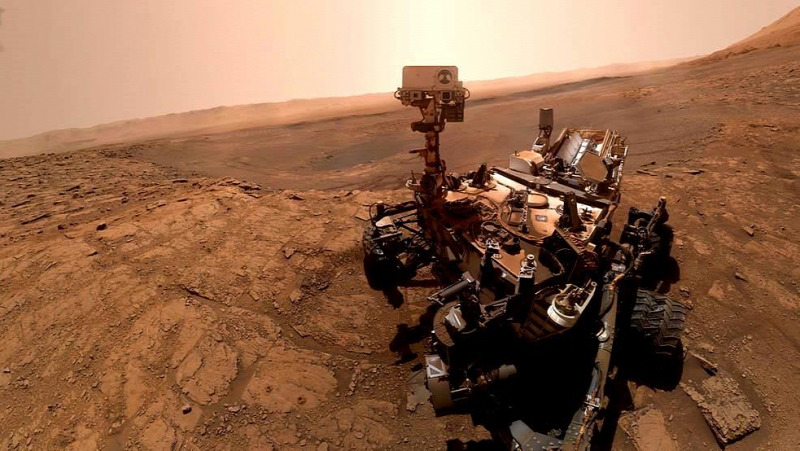
A metán jelenléte azért izgalmas, mert a gázt biológiai folyamatok is létrehozhatják, de a geológiai eredet is utalhat víz jelenlétére. Amennyiben élőlények termelik, azok még ma is a bolygón lehetnek, a metán lebomlásának ideje ugyanis 330 év.
A kutatás következő lépése annak megállapítása lesz, hogy mi hozza létre a marsi metánt. A vizsgálat eredményei egyelőre nem jelentek meg szakmailag lektorált folyóiratban, a Research Square weboldalán azonban olvashatók.
[type] => post
[excerpt] => Amerikai kutatók megtalálhatták a marsi metán-forrást. A beazonosított helyszínek csupán néhány mérföldre vannak a Curiosity marsjárótól – írja a Science Alert tudományos portál.
[autID] => 12
[date] => Array
(
[created] => 1626560040
[modified] => 1626484629
)
[title] => Megtalálhatták a marsi metán-forrást
[url] => https://life.karpat.in.ua/?p=64296&lang=hu
[status] => publish
[translations] => Array
(
[hu] => 64296
)
[aut] => totinviktoria
[lang] => hu
[image_id] => 64297
[image] => Array
(
[id] => 64297
[original] => https://life.karpat.in.ua/wp-content/uploads/2021/07/20191025curiosity4.jpg
[original_lng] => 141456
[original_w] => 800
[original_h] => 451
[sizes] => Array
(
[thumbnail] => Array
(
[url] => https://life.karpat.in.ua/wp-content/uploads/2021/07/20191025curiosity4-150x150.jpg
[width] => 150
[height] => 150
)
[medium] => Array
(
[url] => https://life.karpat.in.ua/wp-content/uploads/2021/07/20191025curiosity4-300x169.jpg
[width] => 300
[height] => 169
)
[medium_large] => Array
(
[url] => https://life.karpat.in.ua/wp-content/uploads/2021/07/20191025curiosity4-768x433.jpg
[width] => 768
[height] => 433
)
[large] => Array
(
[url] => https://life.karpat.in.ua/wp-content/uploads/2021/07/20191025curiosity4.jpg
[width] => 800
[height] => 451
)
[1536x1536] => Array
(
[url] => https://life.karpat.in.ua/wp-content/uploads/2021/07/20191025curiosity4.jpg
[width] => 800
[height] => 451
)
[2048x2048] => Array
(
[url] => https://life.karpat.in.ua/wp-content/uploads/2021/07/20191025curiosity4.jpg
[width] => 800
[height] => 451
)
[full] => Array
(
[url] => https://life.karpat.in.ua/wp-content/uploads/2021/07/20191025curiosity4.jpg
[width] => 800
[height] => 451
)
)
)
[video] =>
[comments_count] => 0
[domain] => Array
(
[hid] => life
[color] => red
[title] => Життя
)
[_edit_lock] => 1626473830:12
[_thumbnail_id] => 64297
[_edit_last] => 12
[views_count] => 2705
[_oembed_69c7a6f3422bc2baabcc41024424858a] => China National Space Administration releases latest high-definition Mars images taken and sent back by #Zhurong, the country's first Mars rover. #Tianwen1 #Tianwen #祝融 #天问 pic.twitter.com/64wVWYs8jF
— WatchTower (@WatchTowerGW) June 11, 2021
[_oembed_time_69c7a6f3422bc2baabcc41024424858a] => 1626473831
[_oembed_20ce5ecb79e31c6e14d8a9c485b3cd67] =>
[_oembed_time_20ce5ecb79e31c6e14d8a9c485b3cd67] => 1626473832
[_oembed_0f837b60e3b9e0c9c06880004761fafb] =>
[_oembed_time_0f837b60e3b9e0c9c06880004761fafb] => 1626473832
[_oembed_10157a6e422fb1a2ba1fb2b21d9ed627] => You wouldn’t believe what I just saw.
More images and video to come...#MarsHelicopterhttps://t.co/PLapgbHeZU pic.twitter.com/mbiOGx4tJZ
— NASA's Perseverance Mars Rover (@NASAPersevere) April 19, 2021
[_oembed_time_10157a6e422fb1a2ba1fb2b21d9ed627] => 1626473832
[_oembed_46abdc17400367dbbca951f7f8c533b3] => A tri of dust devils in Jezero Crater caught on camera by @NASAPersevere on sol 372 pic.twitter.com/bFd9BMp24D
— Kevin M. Gill (@kevinmgill) March 10, 2022
[_oembed_time_46abdc17400367dbbca951f7f8c533b3] => 1648238804
[_oembed_de2cab78f30097905fa3838a24f05e3e] =>
[_oembed_time_de2cab78f30097905fa3838a24f05e3e] => 1649912542
[_oembed_f73389d4a56b6973b8ef21bf5a795789] =>
[_oembed_time_f73389d4a56b6973b8ef21bf5a795789] => 1672416215
[_oembed_6d80054a2a165daa3b00545a76d7a2e6] => Starship is ready for launch ?
Awaiting regulatory approval
— Elon Musk (@elonmusk) April 9, 2023
[_oembed_time_6d80054a2a165daa3b00545a76d7a2e6] => 1683892971
[_oembed_eab5644198e7637d4f057ae939d6a551] => Starship fully stacked at Starbase. Team is working towards a launch rehearsal next week followed by Starship’s first integrated flight test ~week later pending regulatory approval pic.twitter.com/9VbJLppswp
— SpaceX (@SpaceX) April 6, 2023
[_oembed_time_eab5644198e7637d4f057ae939d6a551] => 1683892972
[_oembed_10a812f7c83641a3ae60ce61420ff494] => Starship is ready for launch 🚀
Awaiting regulatory approval
— Elon Musk (@elonmusk) April 9, 2023
[_oembed_time_10a812f7c83641a3ae60ce61420ff494] => 1719771353
[_oembed_cb76a33d4042f3b100e75479a14d80d4] => Starship fully stacked at Starbase. Team is working towards a launch rehearsal next week followed by Starship’s first integrated flight test ~week later pending regulatory approval pic.twitter.com/9VbJLppswp
— SpaceX (@SpaceX) April 6, 2023
[_oembed_time_cb76a33d4042f3b100e75479a14d80d4] => 1719771353
[_oembed_c88148efbe1c9c8d5c12f0136891b3ab] =>
[_oembed_time_c88148efbe1c9c8d5c12f0136891b3ab] => 1719771353
[_oembed_fb00ea73631483fce2d4abf7ab0c1d60] =>
[_oembed_time_fb00ea73631483fce2d4abf7ab0c1d60] => 1719771354
[_oembed_f9ae9abb0d4fce11c520b492a5fcd1c5] => NASA just released the clearest view of Mars ever. (sound of Mars)
pic.twitter.com/XNIYJ0f15R
— Science (@ScienceGuys_) June 17, 2024
[_oembed_time_f9ae9abb0d4fce11c520b492a5fcd1c5] => 1721247995
[_oembed_399ad795235db89e01f77babb17efbf2] =>
[_oembed_time_399ad795235db89e01f77babb17efbf2] => 1731515660
[_oembed_41ce0c70bfdb74e7fff3a4ae8583e2e4] => Russia’s new plasma engine could reach Mars in just 30 days.
Russia's new plasma rocket engine is engineered to cut the transit time to Mars from 7 months down to between 30 and 60 days.
This device uses magnetic forces to speed up charged hydrogen particles to nearly 100 km/s… pic.twitter.com/S20us6N1RI
— Astro Joel (@JoelWard2000) February 11, 2025
[_oembed_time_41ce0c70bfdb74e7fff3a4ae8583e2e4] => 1742296809
[_oembed_e822a8fdebda26b41a4c18f4cac727eb] => 🇷🇺 RUSSIA's NEW PLASMA ENGINE COULD REDUCE MARS 🔴 TRAVEL TIME TO 30 DAYS!
A faster journey to Mars would not only increase efficiency but also minimize the risks associated with prolonged exposure to cosmic radiation for astronauts.
The plasma engine utilizes hydrogen as… pic.twitter.com/lTGtVYzmaA
— Brian Basson (@BassonBrain) February 9, 2025
[_oembed_time_e822a8fdebda26b41a4c18f4cac727eb] => 1742296809
[_oembed_0f2acd7bdc22e7446b5b836eea45cfbb] => Russia’s plasma engine could reach Mars in 30 days, drastically reduce space travel timehttps://t.co/JogHCC1pu9
— Interesting Engineering (@IntEngineering) February 9, 2025
[_oembed_time_0f2acd7bdc22e7446b5b836eea45cfbb] => 1742296809
[_algolia_sync] => 1202737028001
[labels] => Array
(
)
[categories] => Array
(
[0] => 41
[1] => 596
[2] => 49
[3] => 598
[4] => 39
)
[categories_name] => Array
(
[0] => Cikkek
[1] => Érdekes
[2] => Hírek
[3] => Tudomány
[4] => Világ
)
[tags] => Array
(
[0] => 10322
[1] => 59028
)
[tags_name] => Array
(
[0] => Mars
[1] => metán-forrás
)
)
[9] => Array
(
[id] => 62686
[content] =>
A Naprendszernek a központi csillagtól számított negyedik Föld-típusú bolygója, a Mars, száraz, hideg és kietlen égitest. Ezért is számított nagy szenzációnak, amikor 2018-ban az Európai Űrügynökség (ESA) Mars Express szondája nagyobb mennyiségű folyékony vízre utaló jelet detektált a vörös bolygó déli pólusának körzetében. A NASA szervezete, a Jet Propulsion Laboratory ( JPL) egy kiterjesztett adatbázis átvizsgálásának eredményeként arra a következtetésre jutott, hogy a Mars felszíne alatt sokkal több folyékony halmazállapotú víz rejtőzhet az eddig feltételezetteknél. Ami pedig különösen meglepő, hogy a vörös bolygó olyan vidékein is létezhet a felszín alatti víz, ahol pedig állandó jelleggel mélyen a fagypont alatt van a hőmérséklet – olvasható az Origo cikkében.
Erősebb volt a mélyből érkező radarjel, mint ami a felszínről visszaverődött
A NASA, amerikai űrkutatási hivatal szervezete, a Jet Propulsion Laboratory (Sugárhajtómű Laboratórium, JPL, Passadena, Kalifornia) 44 ezer olyan mérési adatot elemezett, amelyek szinte teljesen lefedik a Mars déli pólusvidékét. A bolygó déli pólusát a marsi évszakok függvényében változó kiterjedésű, nagyobb részt fagyott szén-dioxidból, kisebb részt pedig vízjégből álló „sapka” fedi.

A Mars pólusán elterülő jégsapka nagyobb részt fagyott szén-dioxidból, kisebb arányban pedig vízjégből áll Forrás: NASA/JPL Érdemes megjegyezni, hogy a marsi pólussapkák összehasonlíthatatlanul vékonyabbak a Föld északi pólusát, vagy különösen az Antarktiszt beborító vastag jégpáncélnál a marsi pólussapkák ezekhez képest sokkal inkább dér, mintsem jégpáncélszerűek.
A kutatók 15 évre visszamenően átvizsgálták a radarmérések adatsorait. A radarhullámok segítségével lehet bekukkantani a Mars felszíne alá, mivel a rádióhullámok behatolnak a mélyebb rétegekbe is.
A radarjelek természetesen veszítenek az energiájukból, amint áthatolnak a különböző kőzetrétegeken. Ebből, vagyis az elnyelődés mértékéből lehet következtetni a mélyebben fekvő rétegek fizikai jellemzőire. A kutatók azt tapasztalták, hogy néhány esetben a mélyből visszaverődő radarjel erősebb volt a felszínről visszaverődő jelnél.
Egyes tudósok szerint ez egyértelműen arra utal, hogy jelentősebb mennyiségű víz lehet a felszín alatt, mert a folyékony víz felerősítve veri vissza a radarjeleket.
Ellentmondani látszanak a fizikai törvényeinek a felszín alatti marsi tavak
Legelőször a vörös bolygó Mars South Polar Layered Deposits elnevezésű déli sarki területén mutatták ki a felszín alatti folyékony víz jelenlétét. A JPL közelmúltban elvégzett átfogó analízise több tucat hasonló területet tárt fel a déli pólusvidéken. Az átvizsgált mérési adatok gyakorlatilag lefedik a Mars teljes déli pólusterületét.

A déli pólusvidék radartérképe a felszín alatti folyékony víznek vélelmezett pontokkal Forrás: NASA/ESA/JPL/Caltech Ami még különösebb, hogy néhány ponton a felszínhez viszonylag közel, alig 1,5 kilométeres mélységben sikerült a nagyobb mennyiségű folyékony víz jelenlétére utaló jeleket azonosítani.
A számítások szerint itt azonban – 63 Celsius fokos hőmérséklet uralkodik, ami mélyen alatta van a víz fagyáspontjának, még akkor is, ha a vízben feloldott különböző ásványi anyagok koncentrációja miatt – a földi tengervízhez hasonlóan – vélelmezhetően alacsonyabb értékű lehet a fagyáspont. Egy 2019-ben publikált és ezt a kérdést vizsgáló tanulmány arra a következtetésre jutott, hogy a mélyből érkező marsi „geotermikus” hőnek legalább kétszer akkorának kellene lennie, hogy ebben a mélységben folyékony halmazállapotban maradjon a víz.
[type] => post
[excerpt] => A Mars, száraz, hideg és kietlen égitest. A NASA szervezete, a Jet Propulsion Laboratory ( JPL) egy kiterjesztett adatbázis átvizsgálásának eredményeként arra a következtetésre jutott, hogy a Mars felszíne alatt sokkal több folyékony halmazállapot...
[autID] => 12
[date] => Array
(
[created] => 1625351220
[modified] => 1625337796
)
[title] => Jókora tavat találtak a Marson
[url] => https://life.karpat.in.ua/?p=62686&lang=hu
[status] => publish
[translations] => Array
(
[hu] => 62686
[uk] => 62736
)
[aut] => totinviktoria
[lang] => hu
[image_id] => 62687
[image] => Array
(
[id] => 62687
[original] => https://life.karpat.in.ua/wp-content/uploads/2021/07/mars-to.jpg
[original_lng] => 28857
[original_w] => 746
[original_h] => 355
[sizes] => Array
(
[thumbnail] => Array
(
[url] => https://life.karpat.in.ua/wp-content/uploads/2021/07/mars-to-150x150.jpg
[width] => 150
[height] => 150
)
[medium] => Array
(
[url] => https://life.karpat.in.ua/wp-content/uploads/2021/07/mars-to-300x143.jpg
[width] => 300
[height] => 143
)
[medium_large] => Array
(
[url] => https://life.karpat.in.ua/wp-content/uploads/2021/07/mars-to.jpg
[width] => 746
[height] => 355
)
[large] => Array
(
[url] => https://life.karpat.in.ua/wp-content/uploads/2021/07/mars-to.jpg
[width] => 746
[height] => 355
)
[1536x1536] => Array
(
[url] => https://life.karpat.in.ua/wp-content/uploads/2021/07/mars-to.jpg
[width] => 746
[height] => 355
)
[2048x2048] => Array
(
[url] => https://life.karpat.in.ua/wp-content/uploads/2021/07/mars-to.jpg
[width] => 746
[height] => 355
)
[full] => Array
(
[url] => https://life.karpat.in.ua/wp-content/uploads/2021/07/mars-to.jpg
[width] => 746
[height] => 355
)
)
)
[video] =>
[comments_count] => 0
[domain] => Array
(
[hid] => life
[color] => red
[title] => Життя
)
[_edit_lock] => 1625383658:8
[_thumbnail_id] => 62687
[_edit_last] => 12
[views_count] => 4329
[_oembed_69c7a6f3422bc2baabcc41024424858a] => China National Space Administration releases latest high-definition Mars images taken and sent back by #Zhurong, the country's first Mars rover. #Tianwen1 #Tianwen #祝融 #天问 pic.twitter.com/64wVWYs8jF
— WatchTower (@WatchTowerGW) June 11, 2021
[_oembed_time_69c7a6f3422bc2baabcc41024424858a] => 1625303426
[_oembed_20ce5ecb79e31c6e14d8a9c485b3cd67] =>
[_oembed_time_20ce5ecb79e31c6e14d8a9c485b3cd67] => 1625303426
[_oembed_0f837b60e3b9e0c9c06880004761fafb] =>
[_oembed_time_0f837b60e3b9e0c9c06880004761fafb] => 1625303426
[_oembed_10157a6e422fb1a2ba1fb2b21d9ed627] => You wouldn’t believe what I just saw.
More images and video to come...#MarsHelicopterhttps://t.co/PLapgbHeZU pic.twitter.com/mbiOGx4tJZ
— NASA's Perseverance Mars Rover (@NASAPersevere) April 19, 2021
[_oembed_time_10157a6e422fb1a2ba1fb2b21d9ed627] => 1625303427
[_oembed_93bdb37f04a773af100643eefd4107ed] => Moss on ice: Indian scientists’ discovery may change what we know about Antarctica ?❄️
A team of scientists from Punjab has discovered a new moss species in eastern Antarctica and named it Bryum bharatiensis as a tribute to goddess Saraswati. pic.twitter.com/83vGQqKIns
— Botany One (@botanyone) July 6, 2021
[_oembed_time_93bdb37f04a773af100643eefd4107ed] => 1626664504
[_oembed_845bde8055a98db1e278d529d625bd49] => Have you been tuning in for our LIVE water column exploration within Hydrographer Canyon, off the New England coast? You...
Posted by NOAA Ocean Exploration on Wednesday, July 28, 2021
[_oembed_time_845bde8055a98db1e278d529d625bd49] => 1630125692
[_oembed_52dcd02c57d99ed5e11bdb75a248cbcb] => This is what it looks like when you remove the inter-digital flesh from a whale’s flipper. Amazing to see how well the pentadactyl limb is retained! pic.twitter.com/GPu602wXz5
— Dr Mark D. Scherz (@MarkScherz) September 1, 2021
[_oembed_time_52dcd02c57d99ed5e11bdb75a248cbcb] => 1632755674
[_oembed_3956ca13f7024cc04c8797060fd76bda] => This is that flipper now! Mikkel carefully tied each bone to a lattice so that the precise arrangement is kept through maceration. Look at those articular cartilages! pic.twitter.com/TG7GXikKzQ
— Dr Mark D. Scherz (@MarkScherz) September 9, 2021
[_oembed_time_3956ca13f7024cc04c8797060fd76bda] => 1632755674
[_oembed_1894afde13b25af244eb094ebee6d2c9] =>
[_oembed_time_1894afde13b25af244eb094ebee6d2c9] => 1632755674
[_oembed_f0ffa61b20fe3318230e685a00925c46] =>
[_oembed_time_f0ffa61b20fe3318230e685a00925c46] => 1632755675
[_oembed_46abdc17400367dbbca951f7f8c533b3] => A tri of dust devils in Jezero Crater caught on camera by @NASAPersevere on sol 372 pic.twitter.com/bFd9BMp24D
— Kevin M. Gill (@kevinmgill) March 10, 2022
[_oembed_time_46abdc17400367dbbca951f7f8c533b3] => 1648216020
[_oembed_de2cab78f30097905fa3838a24f05e3e] =>
[_oembed_time_de2cab78f30097905fa3838a24f05e3e] => 1649498848
[_oembed_f73389d4a56b6973b8ef21bf5a795789] =>
[_oembed_time_f73389d4a56b6973b8ef21bf5a795789] => 1671214000
[_oembed_6d80054a2a165daa3b00545a76d7a2e6] => Starship is ready for launch ?
Awaiting regulatory approval
— Elon Musk (@elonmusk) April 9, 2023
[_oembed_time_6d80054a2a165daa3b00545a76d7a2e6] => 1681922172
[_oembed_eab5644198e7637d4f057ae939d6a551] => Starship fully stacked at Starbase. Team is working towards a launch rehearsal next week followed by Starship’s first integrated flight test ~week later pending regulatory approval pic.twitter.com/9VbJLppswp
— SpaceX (@SpaceX) April 6, 2023
[_oembed_time_eab5644198e7637d4f057ae939d6a551] => 1681922172
[_oembed_227168dbf5a2805719575c3c3e5d2de1] => Morning! It's your final song suggestion game of not just the week...but also the year...and today we're tackling a prickly issue...or maybe not...as I'm after songs to go with this story please...
Five new soft-furred hedgehog species discoveredhttps://t.co/dzpoBP90rc
— Simon Parkin💙 (@SimonParkinTV) December 22, 2023
[_oembed_time_227168dbf5a2805719575c3c3e5d2de1] => 1704184024
[_oembed_a54eeb35840cdfc7f4a68f01ba203fdc] => Five new species of soft-furred hedgehogs found in South East Asia | World News | Sky News https://t.co/J0wpWGGFa1
— Mary O'Leary (@MaryOLe14603586) December 22, 2023
[_oembed_time_a54eeb35840cdfc7f4a68f01ba203fdc] => 1704184024
[_oembed_25607cb1f0d4f63461aa8ba13d3b07fd] => Los gimnuros o ratas lunares son los "otros" erizos. Pertenecen a la familia Erinaceidae pero subfamilia Galericinae, del SE de Asia. Ejemplos:
- Gimnuro de orejas largas (Hylomys megalotis, izq Laos)
- Gimnuro de orejas cortas (H. suillus, Indochina, Borneo, Java, Sumatra, dcha) pic.twitter.com/UaSqTeHFjr
— cronicasdefauna (@cronicasdefauna) June 17, 2022
[_oembed_time_25607cb1f0d4f63461aa8ba13d3b07fd] => 1704184025
[_oembed_10a812f7c83641a3ae60ce61420ff494] => Starship is ready for launch 🚀
Awaiting regulatory approval
— Elon Musk (@elonmusk) April 9, 2023
[_oembed_time_10a812f7c83641a3ae60ce61420ff494] => 1719902250
[_oembed_cb76a33d4042f3b100e75479a14d80d4] => Starship fully stacked at Starbase. Team is working towards a launch rehearsal next week followed by Starship’s first integrated flight test ~week later pending regulatory approval pic.twitter.com/9VbJLppswp
— SpaceX (@SpaceX) April 6, 2023
[_oembed_time_cb76a33d4042f3b100e75479a14d80d4] => 1719902250
[_oembed_f9ae9abb0d4fce11c520b492a5fcd1c5] => NASA just released the clearest view of Mars ever. (sound of Mars)
pic.twitter.com/XNIYJ0f15R
— Science (@ScienceGuys_) June 17, 2024
[_oembed_time_f9ae9abb0d4fce11c520b492a5fcd1c5] => 1720907154
[_oembed_72af59296509bea9abb5950765f32e53] => Morning! It's your final song suggestion game of not just the week...but also the year...and today we're tackling a prickly issue...or maybe not...as I'm after songs to go with this story please...
Five new soft-furred hedgehog species discoveredhttps://t.co/dzpoBP90rc
— Simon Parkin💙 (@SimonParkinTV) December 22, 2023
[_oembed_time_72af59296509bea9abb5950765f32e53] => 1721085308
[_oembed_545d3c01ce9860827334ba3be365ee01] => Five new species of soft-furred hedgehogs found in South East Asia | World News | Sky News https://t.co/J0wpWGGFa1
— Mary O'Leary (@MaryOLe14603586) December 22, 2023
[_oembed_time_545d3c01ce9860827334ba3be365ee01] => 1721085308
[_oembed_a73bbfa6bac96635ed3c138307bccda9] => Los gimnuros o ratas lunares son los "otros" erizos. Pertenecen a la familia Erinaceidae pero subfamilia Galericinae, del SE de Asia. Ejemplos:
- Gimnuro de orejas largas (Hylomys megalotis, izq Laos)
- Gimnuro de orejas cortas (H. suillus, Indochina, Borneo, Java, Sumatra, dcha) pic.twitter.com/UaSqTeHFjr
— cronicasdefauna (@cronicasdefauna) June 17, 2022
[_oembed_time_a73bbfa6bac96635ed3c138307bccda9] => 1721085308
[_oembed_399ad795235db89e01f77babb17efbf2] =>
[_oembed_time_399ad795235db89e01f77babb17efbf2] => 1729409389
[_oembed_41ce0c70bfdb74e7fff3a4ae8583e2e4] => Russia’s new plasma engine could reach Mars in just 30 days.
Russia's new plasma rocket engine is engineered to cut the transit time to Mars from 7 months down to between 30 and 60 days.
This device uses magnetic forces to speed up charged hydrogen particles to nearly 100 km/s… pic.twitter.com/S20us6N1RI
— Astro Joel (@JoelWard2000) February 11, 2025
[_oembed_time_41ce0c70bfdb74e7fff3a4ae8583e2e4] => 1741377892
[_oembed_e822a8fdebda26b41a4c18f4cac727eb] => 🇷🇺 RUSSIA's NEW PLASMA ENGINE COULD REDUCE MARS 🔴 TRAVEL TIME TO 30 DAYS!
A faster journey to Mars would not only increase efficiency but also minimize the risks associated with prolonged exposure to cosmic radiation for astronauts.
The plasma engine utilizes hydrogen as… pic.twitter.com/lTGtVYzmaA
— Brian Basson (@BassonBrain) February 9, 2025
[_oembed_time_e822a8fdebda26b41a4c18f4cac727eb] => 1741377892
[_oembed_0f2acd7bdc22e7446b5b836eea45cfbb] => Russia’s plasma engine could reach Mars in 30 days, drastically reduce space travel timehttps://t.co/JogHCC1pu9
— Interesting Engineering (@IntEngineering) February 9, 2025
[_oembed_time_0f2acd7bdc22e7446b5b836eea45cfbb] => 1741377892
[_algolia_sync] => 508090399000
[_oembed_f71a0b50d19cd0b116cecea94563219e] =>
[_oembed_time_f71a0b50d19cd0b116cecea94563219e] => 1781174409
[labels] => Array
(
)
[categories] => Array
(
[0] => 41
[1] => 596
[2] => 598
[3] => 39
)
[categories_name] => Array
(
[0] => Cikkek
[1] => Érdekes
[2] => Tudomány
[3] => Világ
)
[tags] => Array
(
[0] => 15854
[1] => 10322
[2] => 57190
)
[tags_name] => Array
(
[0] => felfedezés
[1] => Mars
[2] => tó
)
)
)
[model] => Array
(
[lang] => hu
[offset] => 10
[tax_query] => Array
(
[0] => Array
(
[taxonomy] => post_tag
[field] => id
[terms] => Array
(
[0] => 10322
)
)
)
[afterLocker] => 0
)
[_model] => Array
(
[lang] => hu
[domains] => Array
(
[0] => life
)
[offset] => 10
[tax_query] => Array
(
[0] => Array
(
[taxonomy] => post_tag
[field] => id
[terms] => Array
(
[0] => 10322
)
)
)
[afterLocker] => 0
)
[domains] => Array
(
[0] => life
)
[_domains] => Array
(
[life] => 1
)
[status] => 1
[from_cache] =>
)
Mars (2 Oldal)